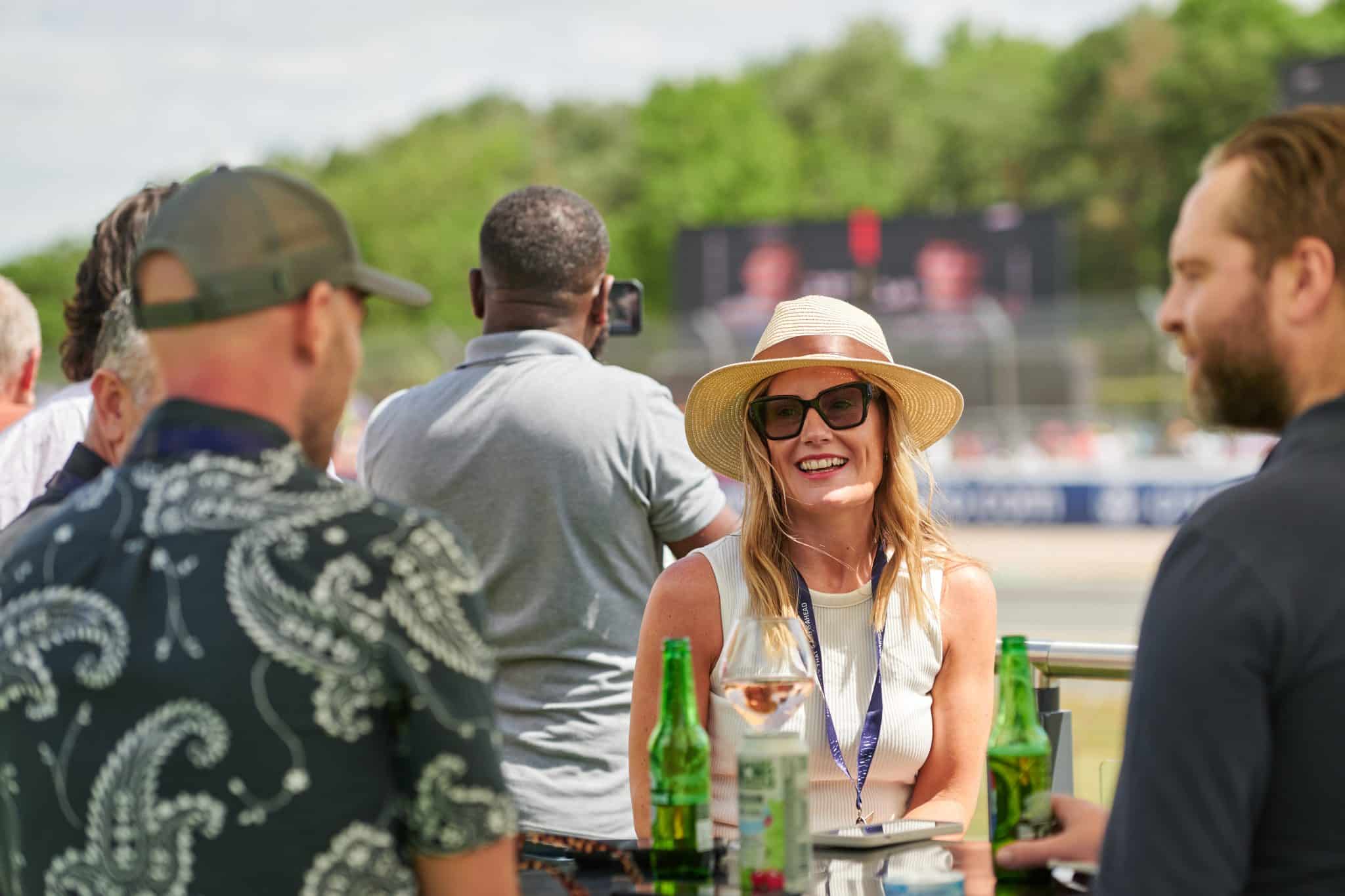
What UK Businesses Need to Know About Client Hospitality

Sporting event hospitality gives UK businesses a rare opportunity to strengthen client entertainment beyond the boardroom. When you share a memorable occasion with a key contact, the conversation shifts from transactions to trust. That shift creates the kind of loyalty that a follow-up email never will.

Engage creates premium hospitality experiences at some of the UK’s most prestigious sporting occasions, giving you the setting to build deeper relationships with the people who matter most to your business. This article covers the practical factors every UK company should consider before booking sporting event hospitality for executive clients.

Key Takeaways: What UK Businesses Need to Know About Client Hospitality

  • Sporting event hospitality creates relaxed environments where executive client relationships develop faster than in formal meetings.
  • Choosing the right event for your audience is the single most important decision in planning client entertainment.
  • Official hospitality packages give your guests access to exclusive spaces, premium dining and dedicated service.
  • Engage matches UK businesses with the right sporting hospitality experience for every client audience and objective.
  • Thoughtful follow-up after the event turns a shared experience into long-term commercial value for your business.

Essential Factors for Using Sporting Event Hospitality to Entertain Executive Clients

1. Match the Event to Your Client’s Interests

Your client does not need to be a lifelong fan to enjoy a day at the races or a Grand Prix. The atmosphere, the exclusivity and the energy of a live sporting occasion create a natural conversation starter for any guest.

Choosing an event that resonates with your client shows real attention to detail. A rugby international at Allianz Stadium suits one audience; a day at Royal Ascot suits another. Ask yourself what your guest will remember, then build the day around it.

2. Understand the Difference Between Tickets and Hospitality

A standard ticket gets you through the gate. Official hospitality gives your guests a fully managed experience with premium dining, private viewing, dedicated service and a personal welcome from arrival to departure.

For executive clients, the distinction is significant. Hospitality removes the logistical stress and replaces it with an environment where your guests feel valued and at ease. That kind of setting is where real business conversations happen and lasting professional relationships take shape over the course of a shared afternoon.

3. Use Hospitality to Build Relationships, Not Close Deals

The most effective client entertainment days have no pitch deck attached. The goal is connection, not conversion. When you remove the sales agenda and replace it with a shared occasion, you create space for authentic conversation and mutual trust to develop naturally.

According to research from Accor (2025), professionals believe revenue could increase by 36% if important meetings were conducted face to face. Sporting hospitality creates exactly those conditions, giving you a relaxed setting where business relationships strengthen on their own.

4. Plan the Guest List With Purpose

A well-considered guest list does more for your event than a bigger budget ever could. Think about which relationships need nurturing, which prospects are close to a commitment and which loyal clients deserve recognition for their continued partnership.

Keep the numbers manageable so you can spend meaningful time with each guest. A smaller, well-curated group around a Test match at Lord’s or a Six Nations fixture creates far more impact than a crowded room. Quality conversations require space, and the right group size makes all the difference.

5. Choose a Hospitality Partner With Official Access

Not all hospitality is arranged through official channels. Working with an authorised partner means your guests receive access to exclusive spaces that carry the full weight and credibility of the venue itself, not resold or secondary-market packages.

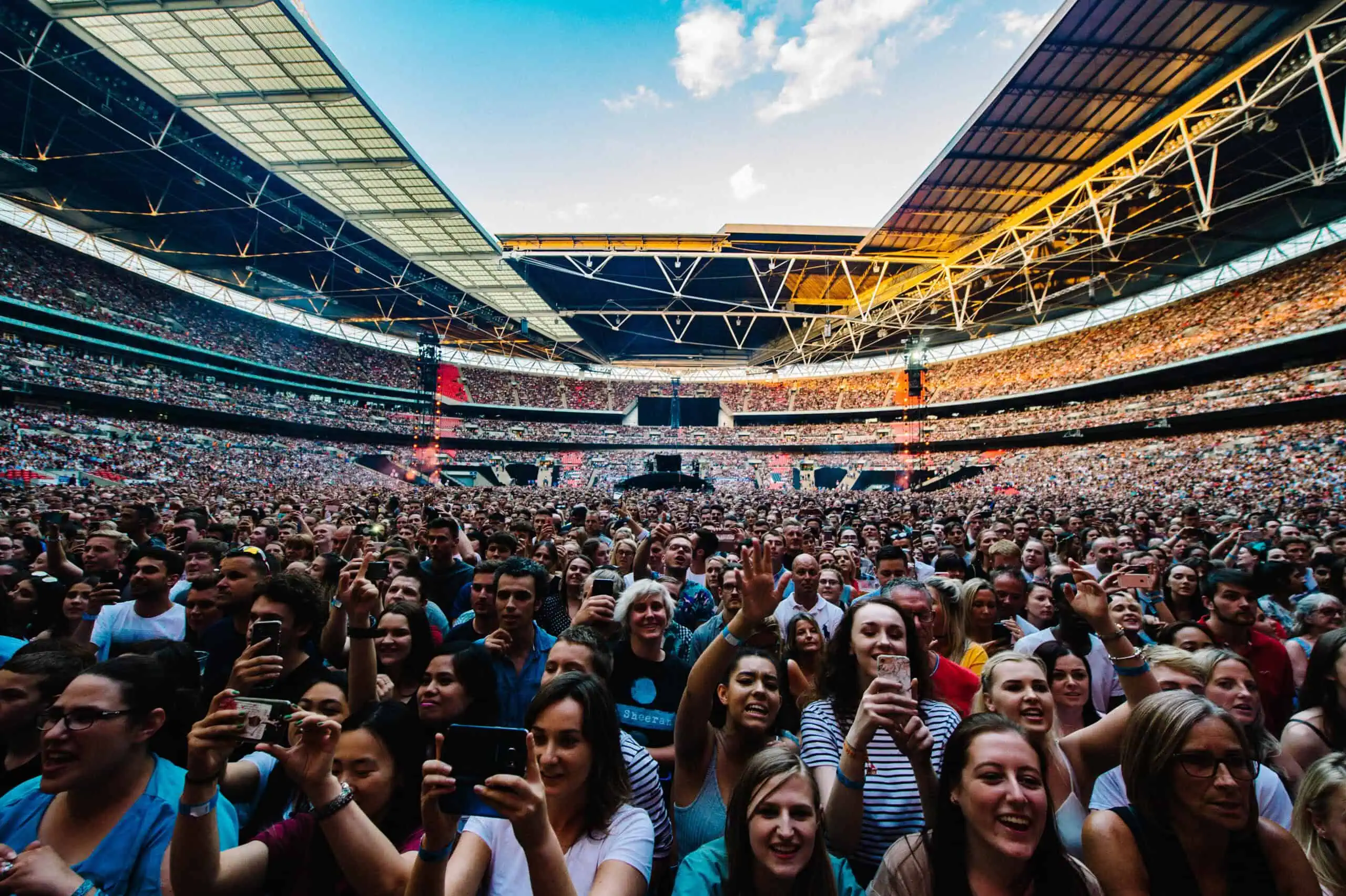
Engage holds official contracts and partnerships with venues including Wembley Stadium, Silverstone and Allianz Stadium. Your clients experience hospitality exactly as it was intended, backed by the venue and the event organisers. That distinction matters when your reputation is on the line.
Engage’s Event Calendar

6. Consider the Full Experience, Not Individual Elements

Premium dining, private viewing and guest speakers all contribute to a memorable day. But the real value comes from how these elements combine into a single, cohesive experience that your guests will remember long after the final whistle.

Think about the journey from arrival to departure. Your clients should feel the occasion building around them, from the welcome reception to the closing moments. Engage handles every detail of that journey so you can give your full attention to the people at your table.

7. Think About What Happens After the Final Whistle

A well-managed hospitality day opens doors. The conversations that start over lunch at a Grand Prix or during a break at a football international carry forward naturally into future meetings, proposals and renewed partnerships.

Follow up afterwards with a personal note referencing something specific from the day. That kind of thoughtfulness shows your client that the relationship matters beyond any single event. A shared sporting memory, referenced at the right moment, keeps the connection alive and strengthens it month after month.

8. Align Hospitality With Your Wider Business Objectives

Client entertainment delivers its strongest return when it connects to a clear business purpose. Use hospitality to nurture high-value relationships, reward loyalty or introduce your brand to prospective clients in a relaxed and memorable setting where the conversation flows naturally.

Engage works with UK businesses to match each event to a specific objective, from client retention to new business development. Through a 15-minute call, we help you identify the right experience for your goals, your audience and the impression you want to create.

Why Sporting Event Hospitality Strengthens Client Relationships

Formal meetings have their place, but the strongest professional relationships often form outside the office. Sporting events create a shared emotional experience that accelerates trust, rapport and mutual understanding.

When you invite an executive client to a premium rugby international or a day in the F1® Paddock Club™, you give them something more valuable than a meeting. You give them a memory. Engage creates these experiences across the UK sporting calendar, giving your business the setting to turn good relationships into lasting partnerships.

Talk to our team to find your perfect experience and start planning your next client hospitality event.

FAQs About What UK Businesses Need to Know About Client Hospitality

Why is sporting event hospitality effective for client entertainment?

Sporting events create relaxed, memorable environments where executive clients connect with your team on a personal level. The shared experience builds trust and rapport more naturally than a formal business setting.

What types of sporting events work for corporate hospitality?

Rugby internationals, Formula 1 Grand Prix events, horse racing, cricket and football all offer excellent hospitality settings. The right choice depends on your client’s interests and the atmosphere you want to create.

How does Engage help UK businesses with client hospitality?

Engage matches you with the right experience from the UK’s most prestigious sporting calendar. We handle every detail from event selection through to the day itself, so you can focus entirely on your guests.

What makes official hospitality different from standard event tickets?

Official hospitality includes private spaces, premium dining, dedicated service and exclusive access. These elements create an environment where your clients are treated with care and attention throughout the day.

How should businesses follow up after a hospitality event?

Send a personal message referencing a specific moment from the day. This reinforces the connection and shows your client the relationship matters beyond the event itself. Engage helps you plan the experience so the impact lasts.

Can sporting hospitality support new business development?

Absolutely. Inviting a prospect to a premium event creates a natural conversation starter and removes the formality of a traditional sales meeting. Engage gives UK businesses the setting to open doors and build new relationships.
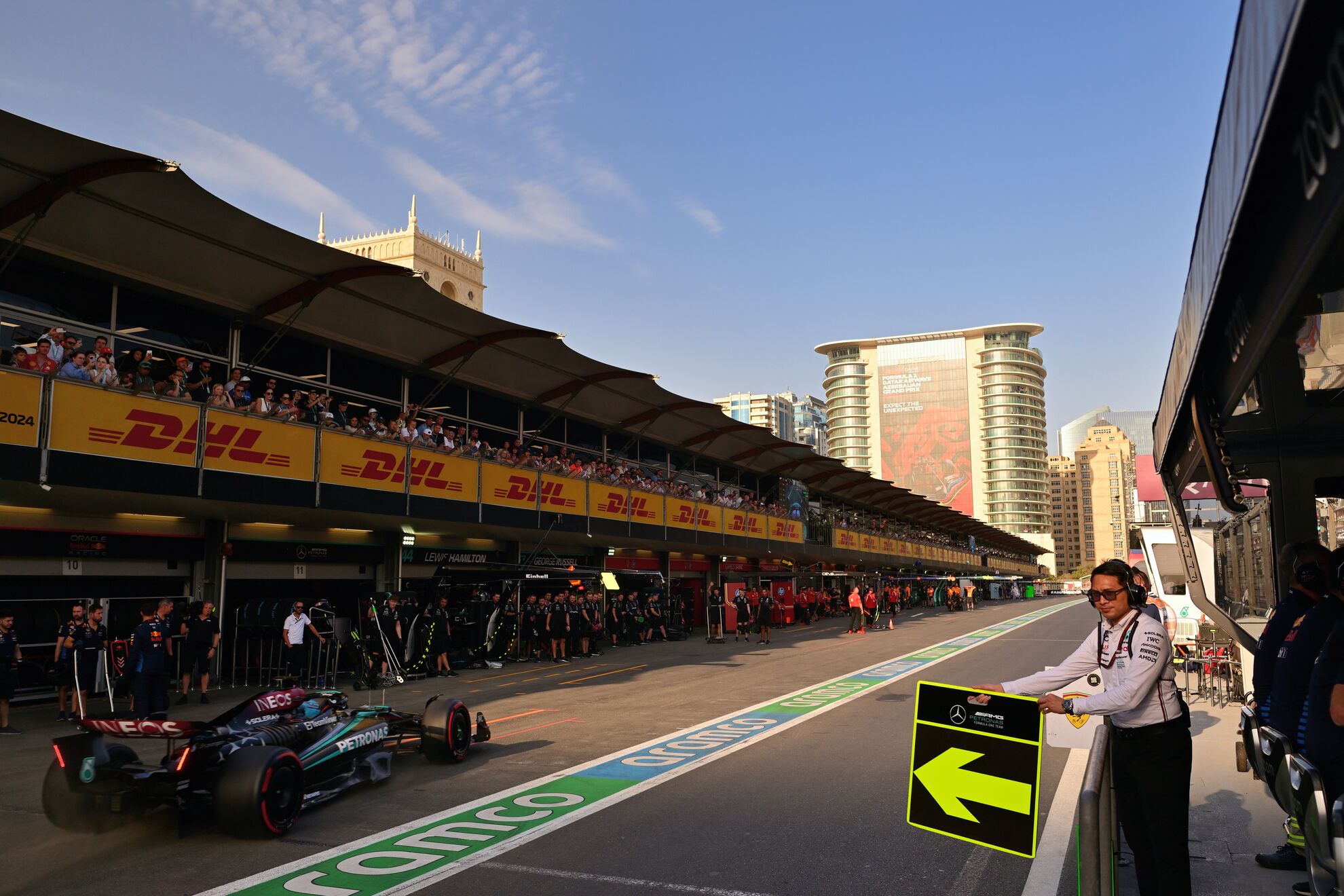

Formula 1: Azerbaijan 2026 Race Round-Up and Bahrain Grand Prix in Malaysia Preview

Upcoming Races: Bahrain Grand Prix™ in Malaysia | Singapore Grand Prix™ |

Race Round-Up: Formula 1 Qatar Airways Azerbaijan Grand Prix 2026

George Russell won the closest Grand Prix finish in forty years, holding Max Verstappen at bay by 0.196 seconds after two late Safety Cars wiped out a lead he had spent the entire afternoon building. Behind them, Isack Hadjar completed Red Bull’s first double podium in over two seasons, Kimi Antonelli salvaged fifth from sixteenth on the grid, and a single lock-up at Turn 1 wiped out three cars and turned Baku’s aftermath into the story of the week.

Qualifying: Russell’s Record Margin

Baku bit early. Antonelli, who has spent most of this season looking unflappable, clipped the wall at Turn 1 in the opening segment of qualifying and damaged his car badly enough to end his session there. The championship leader would start sixteenth.

His teammate then produced the lap of the year. Russell took pole by 0.837 seconds over Charles Leclerc, the biggest qualifying margin of the season by a distance, and his fifth pole of 2026. Around a circuit where the top ten are usually covered by a few tenths, it looked faintly absurd.

Oscar Piastri and Hadjar shared the second row, with Lando Norris and Lewis Hamilton behind them. The grid then shuffled before lights out. Carlos Sainz dropped from ninth to fourteenth for a yellow flag infringement, both Aston Martins fell to the back row for power unit changes, and Sergio Perez was penalised for impeding Piastri without actually moving, since he was already last.

Race Day in Baku

Russell Disappears, Red Bull Come Alive

Russell launched cleanly and was gone. Piastri took second, leaving Leclerc exposed, and within a handful of laps the Red Bulls had worked through the McLaren and the Ferrari. Hadjar took Norris, Verstappen took Norris, and then both dispatched Leclerc with an ease that said a great deal about Red Bull’s pace in a straight line.

There was an awkward moment when Hadjar questioned his teammate’s speed over the radio and asked the team to tell Verstappen to push, before changing his mind and insisting his own tyres were fine. Red Bull waved Verstappen through anyway, and he set off after Piastri, who was already reporting rear tyre trouble.

Russell, meanwhile, had built a ten-second cushion by half distance. His only concern was a brush with the wall at Turn 15 and a tyre pressure that did not feel quite right.

One Lock-Up, Three Cars Out

Alex Albon locked up and buried his Williams in the barrier at Turn 6, bringing out the first Safety Car and handing the leaders a free pit stop. Red Bull executed an immaculate double stack to keep their drivers in order.

At the restart, Verstappen finally took second from Piastri. Further back, Franco Colapinto locked up into Turn 1, hit teammate Pierre Gasly, and Gasly in turn could not avoid Norris. All three retired on the spot. At almost the same moment, Arvid Lindblad clipped Liam Lawson’s rear wheel, prompting one of the radio messages of the season from the New Zealander, who observed that being taken out by his own teammate was pretty sick.

The second restart claimed another victim. Piastri, running third, locked up at Turn 1 exactly as others had, spun to rejoin, and fell to fifteenth. McLaren’s afternoon was over in every meaningful sense.

A Finish for the Archive

With eight laps left, Antonelli swept past Hamilton down the main straight to take sixth, an impressive piece of damage limitation from a driver who had started sixteenth.

At the front, Verstappen was all over Russell. Valtteri Bottas then found the wall late on, and the resulting yellow flag very nearly decided the race. Russell lifted, and when he got back on the power he had no turbo and briefly no drive. Verstappen pulled alongside on the run to the line and still could not get there, finishing 0.196 seconds back. It is the closest contested finish since the 1986 Spanish Grand Prix.

Hadjar took third, ten seconds adrift, for Red Bull’s first double podium since the 2024 Chinese Grand Prix. Leclerc was fourth, Antonelli fifth and Hamilton a lonely sixth.

Lindblad beat Esteban Ocon to seventh across the line, with Ollie Bearman ninth as Haas scored with both cars for the first time since Monaco, and Sainz tenth. Nico Hulkenberg and Lawson missed out, Piastri recovered only to thirteenth, and Gabriel Bortoleto fell to fifteenth after a ten-second penalty for overtaking under yellows.

Albon, Colapinto, Gasly, Norris, Fernando Alonso and Lance Stroll all failed to finish.

Formula 1 2026 Season

Seven rounds remain, and Formula 1 heads straight into a triple header. Engage Hospitality is an Official Formula 1® Paddock Club™ Authorised Distributor, with premium access across the closing stretch of the calendar.

F1 standings for 2026

Position Driver Team Wins Podiums Points 
1 Kimi AntonelliMercedes 812302
2 George RussellMercedes38236
3 Lewis HamiltonFerrari15198
4 Lando NorrisMcLaren25186
5 Charles LeclercFerrari 14179
6 Max VerstappenRed Bull0 7163
7 Oscar PiastriMcLaren0 2120
8 Isack HadjarRed Bull0286
9 Liam LawsonRacing Bulls0 059
10 Pierre GaslyAlpine0 041

Antonelli’s lead is down to 66 points, from 81 before the weekend. Mercedes lead Ferrari by 160 points in the constructors’ championship.

Paddock Gossip

The Colapinto Fallout

Norris did not hold back after climbing out of his wrecked McLaren, calling for the FIA to consider race bans and saying the standard of driving involved did not deserve a place in Formula 1. He apologised to Colapinto directly once he had calmed down, but the comments had already travelled.

What followed was uglier than the accident. Alpine were forced to issue a statement condemning online abuse, this time directed at Norris, having previously had to do the same on Colapinto’s behalf. An Argentinian politician weighed in to call Norris a hypocrite. Colapinto’s unserved ten-second penalty has been converted into a five-place grid drop for Sepang, and there is open speculation about whether Alpine will run him at all in Malaysia, though nothing has been confirmed.

Red Bull Are Back in the Conversation

Two cars on the podium, and the first time that has happened since the Chinese Grand Prix in 2024, a drought of 57 races. Verstappen is still without a win in 2026, which remains the oddest statistic of the season, but two tenths is as close as he has come.

The wider picture matters more for the closing rounds. Red Bull have closed significantly on McLaren in the fight for third in the constructors’ championship, and on a circuit that rewarded straight-line efficiency they were comfortably the second-quickest team.

Horner to Ferrari?

Treat this one as paddock talk rather than fact, because that is what it currently is. Fred Vasseur said he is asked about his Ferrari future roughly twenty-five times a day, which is not a denial so much as an acknowledgement that the question will not go away. Christian Horner, meanwhile, has been publicly reflective since leaving Red Bull, offering the verdict that the team lost its vibe.

Put the two together and the paddock has drawn its own conclusions. Nothing has been announced by either party, and Ferrari have not indicated any change is coming.

Russell’s Turbo Scare

The detail that nearly changed the result. Russell explained afterwards that lifting for the late yellow flag left him with no turbo and effectively no power when he got back on the throttle, which is why Verstappen suddenly appeared alongside on the final run to the line. Given the margin, a fraction more hesitation would have cost him the win.

Bahrain Grand Prix in Malaysia Preview

Formula 1 now heads to Sepang for the strangest entry on the 2026 calendar, and one of its most welcome.

Why a Bahrain Grand Prix Is Happening in Malaysia

The Bahrain Grand Prix was due to run at Sakhir in April before conflict in the region forced its cancellation, along with the Saudi Arabian round. Under an agreement between Formula 1, the FIA and the governments of Bahrain and Malaysia, the race was reinstated at Sepang with the Bahrain name, ticket pricing rights and race proceeds all staying with Bahrain. Malaysia hosts without paying a licence fee.

Odd, but not unprecedented. The 1982 Swiss Grand Prix was held in France, and the Luxembourg Grand Prix ran at Germany’s Nürburgring in the late nineties.

The Layout and Where the Overtaking Should Happen

Sepang is a 5.543-kilometre, 15-turn Hermann Tilke design, and the first circuit he built for Formula 1. The race runs to 56 laps on Sunday 4 October, starting at 3pm local time.

The defining feature is two long straights separated by the tight Turn 15 hairpin, which is about as reliable an overtaking recipe as the sport has: full throttle, brutal braking, an alternative line into the corner. Turn 1 at the end of the pit straight is the other obvious passing place, with the wide opening complex allowing drivers to attack from several lines. The sweeping Turns 5 and 6 reward commitment and balance rather than outright power, which forces teams into a genuine compromise between straight-line speed and stability through the quick stuff.

One caution. A wide track and a history of good racing do not guarantee passing under the 2026 rules, and how well these cars follow each other at Sepang will only become clear in practice.

How It Compares to Baku

The two could hardly be more different, which makes the back-to-back scheduling interesting.

Baku is a low-downforce street circuit with walls a few feet from the racing line, where a single lock-up ends your afternoon, as three drivers discovered on Saturday. Sepang is a permanent, wide-open facility with generous run-off, where mistakes cost time rather than the car. Baku rewards shedding downforce for the long blast to Turn 1. Sepang punishes that choice through Turns 5 and 6.

Then there is the weather. Heat and humidity at Sepang are punishing for drivers and hard on brakes and tyres, and sudden tropical downpours have decided races there before. Nobody has raced a current-generation car in those conditions, and this could be the most physically demanding weekend of the season.

What a One-Off Return Means for Hospitality Demand

Sepang hosted nineteen consecutive Grands Prix from 1999 to 2017 before the hosting fee ended it, and this is a single-race deal rather than a return to the calendar. That combination tends to concentrate demand.

Two things make this weekend unusual commercially. Firstly, the circuit sits beside Kuala Lumpur International Airport and roughly an hour from central KL, which makes it one of the easiest venues on the calendar to build a client trip around. Secondly, the Singapore Grand Prix follows seven days later, so a single trip can cover two Grands Prix, one of them the final Sprint weekend of the season. For corporate hosts weighing a long-haul journey, two events for one set of flights changes the calculation considerably.

Paddock Club is available for both. Given the one-off nature of Sepang and the fact that Marina Bay has sold strongly every year it has run, anything for this triple header needs confirming quickly.

Bahrain Grand Prix in Malaysia hospitality | F1® Paddock Club™ packages

After Sepang

Singapore follows on 9 to 11 October and hosts the final Sprint weekend of the season under the Marina Bay lights. The championship then crosses the Atlantic for Austin on 23 to 25 October and Mexico City on 30 October to 1 November.

Singapore Grand Prix hospitality

Frequently Asked Questions

Who won the 2026 Azerbaijan Grand Prix? George Russell won in Baku for Mercedes, holding off Max Verstappen by 0.196 seconds. Isack Hadjar completed the podium in third for Red Bull.

How close was the Azerbaijan Grand Prix finish? Russell beat Verstappen by 0.196 seconds, the closest contested Grand Prix finish since the 1986 Spanish Grand Prix.

Why is the Bahrain Grand Prix being held in Malaysia? The race was originally scheduled for Bahrain International Circuit in April but was cancelled because of conflict in the region. An agreement between Formula 1, the FIA, Bahrain and Malaysia relocated it to Sepang International Circuit, with Bahrain retaining the race name and proceeds.

When is the Bahrain Grand Prix in Malaysia 2026? The race weekend runs from Friday 2 to Sunday 4 October 2026 at Sepang International Circuit, with the race starting at 3pm local time on the Sunday.

Where can I book Formula 1 hospitality for Sepang and Singapore? Engage Hospitality is an Official Formula 1® Paddock Club™ Authorised Distributor and offers hospitality packages for both the Bahrain Grand Prix in Malaysia and the Singapore Grand Prix, alongside the rest of the 2026 season.

Experience Formula 1 with Engage

Sepang’s return after nine years away is a one-off, and it lands in the same fortnight as Singapore’s night race. Few stretches of the calendar offer that much in a single trip.

Engage Hospitality is an Official Formula 1® Paddock Club™ Authorised Distributor, offering premium access at races across the calendar. Whether you are hosting clients above the team garages at Sepang, entertaining under the lights at Marina Bay, or planning ahead for Austin and Mexico City, our team can build the package around you.

Explore F1® Paddock Club™ packages

Entertaining 20 People: Private Box, Shared Table or Padded Seats?

Hosting a group of 20 at a major sporting or entertainment event puts you in an awkward middle ground. The group is too big for a couple of tables of four, but often too small to justify taking over an entire facility. The right choice depends on what you want the day to achieve: privacy, atmosphere, value or the best possible view. This guide compares the three main formats (private boxes, shared tables in a hospitality suite, and premium padded seats) so you can book with confidence.

Why 20 Guests Changes the Maths

Most hospitality is sold per person. That works well for groups of two to ten.

Once you reach 20, you have options that smaller groups simply do not. You may be able to take over a whole box. You could fill two full tables in a shared suite. Or you might spread the group across premium seats with lounge access.

Each format creates a very different day. So before you compare prices, decide what success looks like.

Are you closing a deal? Thanking a team? Impressing new prospects? The answer usually points straight to the right format.

Option One: The Private Box

What you get

A private box gives your group its own room for the day. Packages typically include a dedicated host, private dining and reserved seating in front of or just outside the box.

The space, the timings and the atmosphere are yours to control.

Why it works for 20 guests

Privacy is the big advantage. Conversations stay confidential, which matters when senior clients or live negotiations are involved.

You also set the pace. Lunch, speeches and toasts happen when you want them to. Depending on venue policy, some boxes allow branding or personalised touches too.

Hosting is simpler as well. Everyone is in one room, so nobody ends up stranded on a separate table.

Things to consider

Box capacities vary widely. A box that fits 20 comfortably at one venue may seat far fewer at another, so always check the exact seat count against your guest list.

Boxes can also feel removed from the crowd. At concerts in particular, some guests prefer being closer to the energy.

Finally, you are usually paying for the whole space. A late drop-out means an empty seat you have already paid for.

Best for

Board-level client entertaining, confidential conversations and milestone celebrations where you want complete control of the room.

At Royal Ascot, for example, Engage’s access as an Official Hospitality Supplier includes private boxes throughout the season.

Option Two: A Shared Table in a Hospitality Suite

What you get

With this format, your group books reserved tables inside a larger hospitality facility. You share the room with other guests, but you enjoy the same food, drink and service as everyone else.

Tables in shared suites often seat around ten or twelve. For 20 guests, that usually means two tables side by side.

Why it works for 20 guests

Atmosphere is the headline. A busy suite has a real buzz, and many include entertainment through the day.

At Engage’s ICON facilities, that often means guest appearances from sporting legends. At Lord’s, ICON guests enjoy a multi-course lunch and afternoon tea, and past appearances have included the likes of Stuart Broad and Glenn McGrath.

At Wembley Stadium, our ICON facility in the East Stand overlooks the pitch, with private seating just outside the suite.

Value is the other big benefit. You pay per person, so the cost scales neatly with your guest list.

Things to consider

Privacy is limited. Neighbouring tables are close by, so this format is less suited to sensitive discussions.

You also have less control over timings, since the running order is set for the whole room.

Two tables can split your group. Ask for adjacent tables and plan your seating carefully so hosts are spread across both.

Engage’s Event Calendar

Option Three: Padded Seats With Lounge Access

What you get

Premium seating gives each guest a comfortable, well-positioned seat in one of the best areas of the venue. Depending on the package, it may include access to a lounge or bar, with dining that ranges from a light menu to a full meal.

Wimbledon debenture seats are a well-known example of this style, pairing prime show court seats with exclusive lounge access.

Why it works for 20 guests

This format puts the event first. It suits guests who are there for the sport or the show above everything else.

It is also flexible. Guests can come and go between their seats and the lounge at their own pace.

In many cases, it is the lowest cost per head of the three options.

Things to consider

Securing 20 seats together can be tricky for high-demand events, so book early.

Hosting is also less structured. Without a single table or room, it is harder to work the group and hold meaningful conversations.

Best for

Sports-mad guests, concerts, budget-conscious groups and mixed groups who want freedom through the day.

The Hybrid Approach

With 20 guests, you do not have to choose just one format.

You could host your most important clients in a private box and place the wider team on a shared table nearby. Everyone enjoys the day, and you still get quiet time with the people who matter most.

Another option is to split the budget across two events. Ten guests at a Test match at Lord’s and ten at Royal Ascot can reach a wider mix of clients than one large day.

Our team can help you build a combination that fits your goals.

Key Factors in Choosing UK Sporting Event Hospitality

Choosing the right corporate client entertainment at a UK sporting event comes down to more than just the fixture itself. It’s about the impression you leave on your guests, the conversations that happen between courses, and the relationships that grow stronger because of the experience you created together.

Engage helps you match the right event to the right occasion, handling every detail so you can focus on your guests. This guide walks you through the key factors that shape a memorable corporate hospitality experience at some of the UK’s most celebrated sporting occasions.

Key Takeaways: Choosing UK Sporting Event Hospitality

  • Match your event choice to the interests, passions, and expectations of your specific guests for the strongest impact
  • The level of access and exclusivity you choose directly shapes how memorable the experience feels for your guests
  • Service quality and genuine attention to detail matter far more than the size or profile of the venue
  • Engage gives you trusted expertise and official partnerships across rugby, racing, football, and Formula 1 hospitality
  • Timing your hospitality around the UK sporting calendar strengthens client relationships at every point in the year

What to Consider When Choosing UK Sporting Event Hospitality

1. Match the Event to Your Guests’ Interests

Your choice of sporting event sets the tone for the entire day. A guest who follows rugby will feel the energy of a Six Nations fixture in a way that connects instantly. A motorsport enthusiast will appreciate the atmosphere of a Grand Prix weekend.

Think about who you’re hosting and what they care about. The closer the event aligns with their passions, the more natural the conversations become. That personal connection is what turns a corporate day out into something your guests remember and talk about afterwards.

2. Consider the Occasion and Your Objectives

Are you thanking a long-standing client, nurturing a new relationship, or rewarding your own team? Each goal calls for a different atmosphere, setting, and energy. A relaxed summer afternoon at Royal Ascot suits a celebratory tone perfectly.

A high-profile football match at Wembley Stadium creates shared excitement that cements new partnerships quickly. Aligning the event’s energy with your hosting purpose ensures every moment feels intentional and that your guests walk away with a lasting impression long after the final whistle.

3. Evaluate the Level of Access and Exclusivity

The hospitality experience you choose should go beyond a good seat. Look for access that creates genuine talking points. Being in the ICON hospitality suite at a major venue or walking the pit lane before a Formula 1 race gives your guests stories they carry long after the event.

Exclusive access turns a standard day out into a landmark moment. That distinction makes all the difference when you’re entertaining clients who expect something beyond the ordinary. The stories your guests take away become the foundation of a stronger relationship.

4. Prioritise Service Quality Over Venue Size

Large venues are impressive, but the quality of service on the day truly defines the experience. Attentive hosting, gourmet dining, and a carefully managed schedule allow your guests to relax, be fully present, and focus on the conversations that matter.

When every detail is handled with care, your clients notice. A great corporate hospitality day is remembered for how it felt, for the warmth of the welcome, and for the quality of conversation that happened because the atmosphere, the service, and the setting were right.

5. Think About Guest Expectations and Comfort

Your guests’ comfort shapes their entire impression of the day. Consider practical elements: ease of arrival, the dress code, dietary requirements, and the pace of the schedule. A well-planned day at the Cheltenham Festival accounts for these details so your guests feel looked after from the moment they arrive.

When your guests feel comfortable, they engage more freely. That relaxed confidence is where the real value of hospitality lies, in the quality of the connections made when people are at ease.

6. Use the Sporting Calendar to Build Year-Round Relationships

The UK sporting calendar offers a natural rhythm for client entertainment. The 2027 Guinness Men’s Six Nations opens the year with high-energy rugby fixtures. Spring brings the Cheltenham Festival and the Grand National. Summer delivers Royal Ascot, Wimbledon, cricket internationals, and the British Grand Prix. Autumn continues with Premier League football hospitality and the Nations Championship.

Planning your hospitality across this calendar means you’re building connections consistently. Each event becomes another chapter in the relationship rather than an isolated occasion, and your clients come to look forward to these shared moments.

7. Work with a Specialist Who Handles Every Detail

The right hospitality partner takes care of the complexity so you can be fully present with your guests. A specialist team with established venue relationships and deep event knowledge ensures nothing is left to chance and every detail reflects your standards.

Engage handles everything from initial planning through to the day itself and the follow-up afterwards. With over 20 years of experience and official partnerships across rugby, racing, football, and Formula 1, you get trusted expertise and complete peace of mind on every occasion.

Engage’s Event Calendar

How to Choose the Right Sporting Event Hospitality for Your Clients

The most successful corporate hospitality starts with a clear understanding of who you’re entertaining and why. When you match the event to your guests’ interests, align the atmosphere with your objectives, and choose a level of access that creates genuine talking points, you set the stage for a day that strengthens relationships.

Service quality and guest comfort turn a good experience into an exceptional one. The EY Sports Engagement Index (2025) confirms that live sporting events continue to drive strong engagement across the UK. By planning your hospitality across the sporting calendar, you create multiple opportunities to connect with clients throughout the year.

Engage gives you the expertise to get this right every time. From the horse racing calendar to the F1® Paddock Club™, we match you with the right experience and handle every detail. Explore our event diary and start planning your next occasion.

FAQs about Key Factors in Choosing UK Sporting Event Hospitality

What is the most important factor when choosing corporate hospitality at a sporting event?

Matching the event to your guests’ interests is the single most important factor. When your clients connect with the sport on a personal level, conversations flow naturally and the experience becomes memorable.

Which UK sporting events are most popular for corporate client entertainment?

The Six Nations, Royal Ascot, the Cheltenham Festival, Wimbledon, the British Grand Prix, and Premier League football fixtures are consistently popular. Each offers a distinct atmosphere suited to different hosting goals.

How far in advance should you book corporate hospitality at UK sporting events?

For flagship events like Royal Ascot, the Cheltenham Festival, and the Six Nations, booking several months in advance is recommended. High-demand fixtures sell out quickly, so early planning gives you the widest choice of packages and dates.

What level of access should you look for in a hospitality package?

Look for access that creates genuine talking points. Private suites, behind-the-scenes tours, and exclusive lounge areas give your guests an experience they simply cannot get with a standard event ticket.

How does Engage help corporate hosts choose the right event?

Engage matches you with the right experience based on your objectives, guest profile, and preferred sport. With official partnerships across multiple sports and venues, the team handles every detail from planning through to the day itself.

Can you use sporting event hospitality to build long-term client relationships?

Absolutely. Planning hospitality across the UK sporting calendar creates multiple touchpoints throughout the year. Each event becomes an opportunity to deepen connections and show your clients they are valued beyond the boardroom.

Premier League Update: Five Games In, and Three England Nights at Wembley

The first international break of 2026/27 is here. Manchester City are perfect, Arsenal have just been beaten heavily at Brighton, and both Tottenham and Fulham are still waiting for a first win. Below is the full table after five gameweeks, plus a preview of all three England fixtures at Wembley this autumn.

Five rounds is not a season. It is, however, long enough to tell us who arrived in August ready.

The summer brought nine managerial changes and three promoted clubs. Settling was always going to take time. Instead we have a leader with a perfect record, a third-placed side with the best goal difference in the league, and two clubs on two points.

The Premier League now pauses until Saturday 10 October. Here is where everyone stands, and what comes next for England.

The table after five gameweeks

Every club has played five matches. The table below is correct up to and including Sunday 20 September.

Pos Team P W D L GD Pts
1Manchester City5500+815
2Arsenal5401+412
3Brighton & Hove Albion5311+1110
4Brentford5230+69
5Leeds United5230+49
6Liverpool5230+39
7Everton5230+39
8Hull City5221+28
9Newcastle United522108
10Chelsea5212-27
11Ipswich Town5203-46
12Manchester United512205
13Nottingham Forest5122-15
14Sunderland5113-44
15Crystal Palace5113-54
16Aston Villa5113-54
17Bournemouth5032-23
18Coventry City5104-93
19Fulham5023-32
20Tottenham Hotspur5023-62
Premier League table after five gameweeks, correct to 20 September 2026.

Thirteen points separate top from bottom. That is a wide spread this early in a season.

Erling Haaland leads the scoring charts on five goals. Alexander Isak sits just behind him on four.

Arsenal: champions given a reality check

A near-perfect first six weeks

Arsenal could hardly have defended their first title in twenty-two years more convincingly. Mikel Arteta’s side won every fixture they played across all competitions.

The run started with a 3-0 Community Shield win over Manchester City. Four league victories followed, over Bournemouth, Chelsea and Sunderland among them. Arsenal scored eight goals and conceded just one.

It all looked reassuringly familiar. Then came Saturday afternoon on the south coast.

What went wrong at Brighton

Arsenal lost 3-0 at Falmer Stadium. It was their heaviest Premier League defeat since May 2023, which also came against Brighton.

Pascal Gross and Charalampos Kostoulas both scored from distance in the first half. Chema Andrés, a 21-year-old summer signing, headed a third from a corner just before the hour.

The manner of it hurt most. Brighton pressed Arsenal right to their own goal line and won nearly every first and second ball. Playing out from the back became a liability rather than a weapon.

Kai Havertz had the best chance to change things and was denied one-on-one by Bart Verbruggen. Afterwards, Arteta congratulated Brighton, criticised his side’s technical errors and called it a big lesson to learn.

The midfield question

Arsenal signed Bruno Guimarães from Newcastle in August for a reported £75 million. The Brazilian joined a group already containing Declan Rice, Martin Zubimendi, Mikel Merino and captain Martin Ødegaard.

On paper, it is the deepest midfield in the league. At Brighton, though, the Rice and Guimarães pairing struggled to help the defenders escape pressure. Arteta was asked about that partnership directly after the match.

Big-money midfield signings usually need months rather than weeks. Even so, the balance is now a live talking point.

The striker question

Arsenal’s number nine debate has followed them since Viktor Gyökeres arrived. It has not gone away.

The Gunners create chances readily enough. Converting them at the rate champions need has been less reliable so far, and Bukayo Saka remains their most consistent source of goals.

Is the title race over already?

Not even close. Arsenal sit three points behind Manchester City having played the same number of games.

One September defeat tells you very little about May. What it did do was puncture the sense of inevitability and hand City top spot.

Arsenal return on Saturday 10 October at home to Leeds United. After three weeks to stew, that is a forgiving fixture.

Who has looked good

Manchester City: a seamless handover

Everyone asked the same question in the summer. What happens to City without Pep Guardiola?

So far, Enzo Maresca has picked up the baton without breaking stride. Five wins from five, thirteen goals scored, and a derby win at Old Trafford already banked.

Sunday’s 5-3 victory over Sunderland was the messiest of the lot. City conceded three at home and still won comfortably, which is exactly what champions-in-waiting tend to do in September.

Haaland is scoring freely and Rayan Cherki has settled quickly. A trip to Anfield on 11 October will be the first real test of whether this is sustainable.

Brighton: the best football in the division

Brighton sit third on points and first on goal difference. That tells you most of what you need to know.

Fabian Hürzeler’s side have scored sixteen goals in five matches. They put four past Aston Villa, five past Coventry and three past the champions.

They have lost once, 4-3 at Chelsea, so the defence still needs work. The attack, however, is the most watchable in the country.

Liverpool: Iraola’s quiet rebuild

Andoni Iraola’s first weeks at Anfield have produced no fireworks. That appears to be deliberate.

Liverpool are unbeaten and have kept three consecutive league clean sheets. They have just won at Bournemouth, against Iraola’s old club, through an Isak goal in a forgettable match.

Sixth place with nine points is not a title-winning return. The underlying pattern, though, is encouraging.

Isak has already scored more league goals this season than across the whole of the last one. Iraola inherited a squad needing structure, and structure is arriving.

Hull City lead the promoted clubs

Hull City have adapted fastest of the three promoted sides. Sergej Jakirović’s team have eight points and only lost for the first time on Saturday at St James’ Park.

That is a strong return for a club back in the top flight after nine years away. Ipswich Town sit on six points.

Coventry City are back after a quarter of a century. They lost their opening four, then won at the City Ground on Saturday. That result may matter more to Frank Lampard’s season than the scoreline suggests.

Brentford, Leeds and Everton

Three sides have quietly done exactly what they needed to do.

Brentford are unbeaten under Keith Andrews and have just beaten Chelsea 3-0. Leeds thrashed Newcastle 4-1 at Elland Road. David Moyes has Everton unbeaten and defensively stubborn at their new home.

Who has started badly

Tottenham Hotspur: two goals, two points

The most alarming numbers belong to Spurs. Roberto De Zerbi’s side have scored twice in five matches and sit bottom on goal difference.

Saturday’s 2-3 home defeat to Aston Villa at least produced goals. It also produced a third loss.

De Zerbi arrived to bring flair and possession. Instead, Spurs look uncertain in both boxes. A trip to Old Trafford on 10 October is not an obvious place to find a first win.

Fulham: still waiting

Álvaro Arbeloa has yet to win a Premier League match. Sunday’s 1-1 draw with Manchester United was a game Fulham should have taken.

They led through a Lisandro Martínez own goal. Matheus Cunha then equalised in the eighty-ninth minute with a deflected effort.

Performances have been better than results. Fulham created plenty against United and have competed in most fixtures. Two points from five is still two points from five.

Manchester United: the familiar malaise

Michael Carrick’s side are winless in three league games. They are also out of the Carabao Cup and will spend the break in the bottom half.

Twelfth on five points is hardly a crisis by recent United standards. The flatness of the performances is the real concern.

Bruno Fernandes remains the difference-maker with three goals, including a hat-trick against Ipswich. Everything around him needs work. Carrick was hired to bring stability and identity, and neither has arrived.

Aston Villa and Crystal Palace

Both finished last season in Europe. Both now sit on four points, in fifteenth and sixteenth.

Unai Emery’s Villa have scored just four goals all season, though the win at Spurs offered a first sign of life. Pierre Sage has endured a tough introduction at Selhurst Park, with Saturday’s goalless draw at Leeds at least stopping the bleeding.

Bournemouth

Bournemouth have drawn three and lost two. They sit seventeenth on three points, despite recording more shots on target than almost anyone before Sunday.

Their European campaign opened with a win at Real Sociedad. The process looks sound even if the league table disagrees.

Entertain clients at the home of English football. Engage is an Official Ticket Agent for Wembley Stadium. ICON hospitality packages are available across international fixtures, domestic cup finals and concerts. View Wembley hospitality or explore Premier League packages.

England at Wembley: three nights, three tests

Back in action after a landmark summer

England return to competitive football for the first time since the World Cup. Thomas Tuchel’s side delivered their best tournament finish since 1966.

They topped their group, beat Croatia along the way and lost a late semi-final to Argentina. Bukayo Saka then scored a hat-trick as England won the third-place match against France 6-4.

This autumn brings a UEFA Nations League campaign in League A, Group Three. England face Spain, Croatia and Czechia across six matches, three of them at Wembley.

The calendar has changed too. An extended September and October window delivers four fixtures in eleven days, leaving only two international breaks before the new year.

Tuchel named a twenty-seven-man squad on Friday. Trent Alexander-Arnold and Cole Palmer both return after missing the World Cup, and Jarrad Branthwaite earns a first call-up under this regime. Phil Foden, Ollie Watkins and Noni Madueke all miss out.

Wembley one: England v Spain, Saturday 26 September

This is the hardest possible opener and the most compelling of the three nights. Spain arrive as world champions.

They beat Argentina 1-0 in the final in New Jersey through a Ferran Torres goal in extra time. Remarkably, they conceded once across the entire tournament. Their unbeaten run stands as a European record.

For England, this is a chance at redemption. Spain have been the defining obstacle for this generation of players.

A full Wembley against the best team on the planet is exactly the sort of occasion the stadium exists for. How Tuchel sets up will tell us plenty about his route towards Euro 2028.

View hospitality for England v Spain

Wembley two: England v Czechia, Tuesday 6 October

The window closes at Wembley against Czechia. England will already have faced them in Prague eight days earlier.

Playing the same opponent twice in a fortnight is a quirk of the compressed format. It makes this a points-gathering night rather than a marquee occasion.

Group position could still be finely balanced, though. England travel to Rijeka on 3 October for a match played behind closed doors after a UEFA sanction, so no travelling support will see it.

That makes 6 October the first chance for supporters to react to whatever happens in Croatia. It is also the last sight of this squad in London before November.

View hospitality for England v Czechia

Wembley three: England v Croatia, Thursday 12 November

This is the group’s penultimate match, and potentially the one that decides it. Croatia were England’s first World Cup opponents, beaten 4-2 in a group game that set the tone for the tournament.

They went on to reach the knockout rounds themselves. Croatia remain awkward opponents with genuine tournament pedigree.

By November, England will have played four group games and will know exactly what they need. A trip to Spain follows three days later. A result under the arch could therefore decide whether England reach a Nations League quarter-final in March.

View hospitality for England v Croatia

What is at stake

Quarter-finals for the leading League A sides take place in March 2027. The finals follow in June.

There is a sting at the other end. Under the restructured format, sides finishing third or bottom in a League A group can face a promotion and relegation play-off, or automatic relegation to League B. It depends on how they compare with the other groups.

Browse all England hospitality at Wembley

What comes next

The Premier League returns on Saturday 10 October. Arsenal host Leeds, Manchester United welcome Tottenham in a game both badly need, and Sunderland face Brighton.

The headline act arrives a day later. Liverpool host Manchester City at Anfield in what already looks like the fixture of the autumn.

Given how the first five weeks have gone, three weeks off may be exactly what half the division needs.

Football Hospitality: Premier League Hospitality | FA Cup Hospitality | Carabao Cup Hospitality | International Football Hospitality

Test Cricket for Beginners: Five Days Explained in Five Minutes

Test cricket is the oldest and longest format in the sport, and it has a reputation for being impossible to follow if you did not grow up with it. That reputation is unfair. The basics take about five minutes to learn, and once they click, the slow build of a Test match becomes the most gripping thing in sport. This guide explains what happens across the five days, how a match is actually won, why a draw is not a waste of time, and which day is the best one to attend. With the Rothesay Men’s Ashes Series returning to England in 2027, and the year marking 150 years of Test cricket, there has rarely been a better moment to get up to speed.

Why does a Test match take five days?

Most sports are built around a clock. Test cricket is built around a task. Each side bats twice, and a team’s innings only ends when ten of its eleven batters are out, or when the batting side chooses to stop. There is no time limit on how long that takes.

A single innings can last two full days if the batting is good and the pitch is flat. It can also collapse inside a session. Because four innings have to be completed for a match to reach a result, the format allows five days. That is the whole explanation. Five days is not tradition for its own sake, it is simply how long two teams need to bat twice each.

The name comes from the idea that the format is the ultimate test of a player and a team. Skill matters, but so does concentration across many hours, adaptation to changing conditions, and the nerve to hold a position under pressure for days at a time.

What a single day of Test cricket looks like

A day of Test cricket in England follows a rhythm that barely changes from match to match, which is part of its appeal. Play usually starts at eleven in the morning and finishes at six in the evening, broken into three sessions by two intervals.

The morning session runs from the start until lunch at around one o’clock, and lasts roughly forty minutes. The afternoon session then runs until tea at around twenty to four, a shorter break of about twenty minutes. The evening session takes the day to its close. The fielding side is required to bowl a minimum of ninety overs across the day, and if they fall behind, play is extended to make up the shortfall.

An over is six deliveries bowled from one end of the pitch. After each over, the bowling switches to the other end and a different bowler takes over. That constant change of angle is one of the format’s quiet pleasures once you start noticing it.

For anyone attending, the practical version is this: you get around six hours of cricket, two proper breaks, and a schedule that is genuinely well suited to hosting guests. Very few sporting occasions give you that much time with the people you have invited.

The five days, day by day

No two Tests unfold identically, but the arc is recognisable enough that a newcomer can follow it confidently.

Day one

The captains toss a coin, and the winner chooses whether to bat or bowl first. On a fresh, hard, often green-tinged English pitch, bowling first can be tempting, but batting first and setting a big total is the more common choice. Day one is usually the most heavily attended, the atmosphere is at its sharpest, and the pitch is at its most predictable. A strong first day for the batting side means somewhere around three hundred runs for the loss of only a few wickets.

Day two

The first innings is completed and the second side begins batting. This is often where the match quietly decides itself. If the team batting first pushes past four hundred and then takes early wickets, they establish control that is very hard to reverse. The pitch is still good, so day two frequently produces the highest-quality batting of the match.

Day three

Often called moving day. The second innings finishes, the lead is established, and the third innings begins. The pitch has now been worn by two days of bowlers’ footmarks and is starting to take spin and produce uneven bounce. Scoring gets harder. The side that ends day three in front is usually the side that wins.

Day four

The pressure point. The team batting third is trying to build a lead large enough to be safe, while knowing that batting too slowly leaves no time to bowl the opposition out. This is where captains declare, closing their own innings early to buy bowling time. Day four often sets up either a thrilling final day or an early finish.

Day five

The fourth innings on a worn pitch is the hardest assignment in cricket. One side is chasing a target, the other is chasing ten wickets, and a third outcome sits between them: the draw. Great final days are the reason people love this format. Wickets fall in clusters, the light fades, the crowd goes quiet between deliveries, and the result can turn on a single ball.

Bear in mind that plenty of Tests finish inside four days, and some inside three. That is worth factoring in when choosing which day to book.

How a Test match is won, lost or drawn

There are four possible outcomes, and understanding them is the single biggest step towards following the sport.

A win happens when one side scores more runs across its two innings and dismisses the opposition twice. If the team batting last passes the target, they win by the number of wickets they had left. If the bowling side takes the final wicket first, they win by the number of runs still required.

An innings victory occurs when a side scores more in one innings than the opposition manages in two. It is the most emphatic result in cricket.

A draw happens when the five days run out before four innings are completed. Neither side wins. This is the outcome newcomers find strangest, and it is also the source of some of the format’s greatest drama, because a team facing certain defeat can save the match simply by surviving. Watching nine wickets down with an hour to go is as tense as sport gets.

A tie happens when the scores finish level with the final wicket falling. Across nearly 150 years, it has occurred twice.

Ten terms worth knowing

Over. Six deliveries bowled consecutively from one end.

Wicket. Used two ways: the three stumps at each end, and a batter’s dismissal. “England took three wickets” means three batters were out.

Declaration. A captain voluntarily ending their own innings, usually to leave enough time to bowl the other side out.

The follow-on. If the side batting second finishes at least two hundred runs behind, the side batting first can make them bat again immediately rather than taking their own second innings.

Nightwatchman. A lower-order batter promoted late in the day to protect a better batter from facing the final overs before close.

The new ball. A fresh ball becomes available to the fielding captain after eighty overs. It swings and bounces more, so it often triggers a burst of wickets.

Maiden. An over in which no runs are scored.

Duck. A batter dismissed without scoring.

DRS. The Decision Review System, which allows each side a limited number of challenges to on-field umpire decisions using ball-tracking and other technology.

Stumps. The end of a day’s play.

Which day of a Test should you go to?

If you are hosting clients or colleagues, the choice of day matters more than most people realise.

Day one is the safest and most atmospheric. Play is guaranteed, the ground is full, and the occasion feels like an event in its own right. For corporate hospitality, it is the default recommendation.

Day two frequently delivers the best cricket of the match, with settled batting and long partnerships, in a slightly calmer environment. It is an excellent choice if your guests want to talk as well as watch.

Day three is the pivot. The match is finely balanced, the pitch has started to misbehave, and you are almost guaranteed a meaningful passage of play.

Days four and five carry the highest drama and the highest risk. A Test that is going the distance produces unforgettable final sessions. A Test that is not may already be over. Book these when the series context makes a long match likely, or when the potential payoff is worth the variability.

ICON by Engage at Lord’s and the Kia Oval

London’s two great Test grounds offer genuinely different days out, and Engage hosts its flagship ICON facility at both.

Lord’s is the Home of Cricket, founded in 1814, and the day carries a formality and sense of occasion that no other ground matches. ICON at Lord’s pairs that heritage with modern hospitality: premium seating, a full day of dining from breakfast through lunch and afternoon tea, a complimentary bar, and regular appearances from names such as Stuart Broad, Matt Prior and Glenn McGrath. Private boxes are available for guests who want complete exclusivity.

The Kia Oval in Kennington offers a louder, more social atmosphere and a slightly more relaxed feel. ICON at the Oval sits in a glass-fronted lounge overlooking the pitch with a private balcony putting guests close to the action, alongside the same standard of catering and complimentary bar. It is a strong choice for larger groups or teams where the emphasis is on enjoyment as much as ceremony.

Engage also hosts ICON at Emirates Old Trafford, as an official partner of Lancashire Cricket.

The Ashes explained, and the 2027 series

If you only ever attend one Test match, make it an Ashes Test.

The rivalry dates to 1882, when Australia beat England at the Oval and a newspaper published a mock obituary declaring English cricket dead, adding that the body would be cremated and the ashes taken to Australia. The following winter, England’s touring captain was presented with a small terracotta urn. That urn is now the most famous trophy in the sport, and it permanently resides at Lord’s regardless of who holds the Ashes.

Australia go into the next series as holders, having won the 2025/26 series in Australia by four Tests to one. England will be aiming to reclaim the urn on home soil for the first time since 2015.

The 2027 Rothesay Men’s Ashes Series fixtures

The ECB confirmed the schedule in July 2026. Five Tests will be played between Friday 18 June and Monday 2 August 2027:

TestVenueDates
First TestTrent Bridge, Nottingham18 to 22 June 2027
Second TestLord’s, London30 June to 4 July 2027
Third TestEdgbaston, Birmingham8 to 12 July 2027
Fourth TestThe Utilita Bowl, Southampton21 to 25 July 2027
Fifth TestThe Kia Oval, London29 July to 2 August 2027

Ashes hospitality sells out earlier than any other fixture in the English cricket calendar, and demand for the London Tests in particular tends to be concentrated well over a year in advance. Registering interest now is the most reliable way to secure the day you want.

Frequently asked questions

How long is a day of Test cricket?
Play typically runs from eleven in the morning until six in the evening in England, with a lunch interval of around forty minutes and a tea interval of around twenty minutes. The fielding side must bowl a minimum of ninety overs, and play can be extended if they fall behind that rate.

Why do Test matches end in draws?
A Test is drawn when the five days run out before both sides have completed two innings each. It is not a failure of the format. A side facing defeat can save the match by batting out time, which often produces some of the tensest cricket you will see.

What is the follow-on?
If the team batting second finishes at least two hundred runs behind the team batting first, the captain of the side batting first can require their opponents to bat again immediately rather than taking their own second innings.

Do I need to attend all five days?
No. Tickets and hospitality packages are sold per day, and most spectators attend one day. Each day of a Test is a complete experience on its own.

Which day of a Test match is best to attend?
Day one offers the best atmosphere and guarantees a full day of play. Day two often produces the highest quality cricket. Days four and five carry the most drama but also the risk that the match has already finished.

What is the difference between Test cricket, ODIs and T20?
Test cricket is played over five days with two innings per side and no limit on overs. One Day Internationals give each side fifty overs in a single innings. T20 gives each side twenty overs. Test cricket is the longest format and is widely regarded as the purest examination of a player’s ability.

When is the next Ashes series in England?
The 2027 Rothesay Men’s Ashes Series runs from Friday 18 June to Monday 2 August 2027, across Trent Bridge, Lord’s, Edgbaston, the Utilita Bowl and The Kia Oval.

Experience Test cricket with Engage

Test cricket rewards the people who give it time, and a full day in premium hospitality is the ideal way to do that. Engage is an official hospitality provider for Lord’s, the Kia Oval and Emirates Old Trafford, offering ICON packages that combine the best seats in the ground with a full day of dining, a complimentary bar and appearances from cricketing legends.

Browse our full cricket hospitality programme, explore ICON at Lord’s and ICON at the Kia Oval, or register your interest for the 2027 Ashes and the ICC World Test Championship Final at The Oval.

Contact the Engage cricket team to discuss availability.

The Autumn 2026 Sporting Calendar: Every Event Worth Booking

Autumn is the most underrated quarter in the British sporting year. Between September and December 2026 the calendar delivers a new global rugby tournament with six fixtures at Allianz Stadium, three NFL games in London, the richest raceday in British racing, three England football internationals at Wembley, a white-ball cricket series across six grounds, and a Formula 1 title race that runs all the way to Abu Dhabi in December. This is a month by month guide to what is on, where it is, and which dates are worth locking in before they go.

Why autumn deserves more of your entertaining budget

Ask most people to name the peak of the British hospitality calendar and they will point at June: Royal Ascot, Wimbledon, the Derby, Henley. That is fair enough, but it means autumn gets treated as the quiet run-in to Christmas, and it is nothing of the sort.

Consider what the final four months of 2026 actually contain. International rugby returns in an entirely new format. The NFL plays three regular season games in London across three consecutive Sundays. The Flat racing season is settled at Ascot in October and the jumps season properly begins at Cheltenham in November. England play three home football matches at Wembley. Formula 1 runs a punishing eight-race sprint to the finish. Every major arena in the country moves into its busiest touring season of the year.

There is a practical advantage too. Autumn fixtures land squarely in the window when most businesses are entertaining clients ahead of year end, closing deals before Christmas, and rewarding teams after a long year. The events are there. The budget cycle lines up. It is mostly a question of knowing what is on.

September 2026: two seasons overlapping

September is the month where the summer sports refuse to finish and the winter sports have already started. It makes for an unusually crowded few weeks.

Cricket: Sri Lanka tour England across six grounds

The home summer signs off with a full white-ball series. Sri Lanka play three T20 internationals and three One Day Internationals, and the tour is spread deliberately wide across the country.

The T20s open at the Utilita Bowl in Southampton on Tuesday 15 September, move to Sophia Gardens in Cardiff on Thursday 17 September, and finish at Emirates Old Trafford on Saturday 19 September. The ODI leg then runs at the Riverside on Tuesday 22 September, Headingley on Thursday 24 September, and the Kia Oval on Sunday 27 September.

Two of those are especially relevant if you want the strongest facilities. Emirates Old Trafford on the Saturday is the pick of the T20s for atmosphere, and the Kia Oval closes the entire English international summer, which tends to give the day a sense of occasion that a mid-series fixture does not have.

Explore cricket hospitality, or go straight to our ICON facilities at Emirates Old Trafford and the Kia Oval.

Formula 1: the European leg ends and the title fight tightens

Three races fall in September, and the championship picture going into them is genuinely open at the top of Mercedes. Kimi Antonelli leads the drivers’ standings on 242 points, with George Russell and Lewis Hamilton level on 183 behind him and Russell ahead only on countback. Reigning champion Lando Norris sits fourth after back to back wins either side of the summer break, and Mercedes lead the constructors’ championship by 87 points from Ferrari.

Monza hosts the Italian Grand Prix from Friday 4 to Sunday 6 September. Madrid then makes its debut on the calendar from 11 to 13 September as the final European race of the season, run on a new street circuit. Baku follows from 24 to 26 September, with the race itself moved to the Saturday.

Our Formula 1 hospitality covers every round, and as authorised distributors we can place you inside the F1 Paddock Club at any race on the calendar.

Golf: Wentworth, then the ICON golf days

The BMW PGA Championship returns to Wentworth Club from 15 to 20 September, with the celebrity Pro-Am on Wednesday 16 September and the four tournament rounds running Thursday to Sunday. Alex Noren defends the title he won in a play-off in front of a record crowd, and Wentworth’s proximity to London makes it one of the easiest premium golf days in the country to build a client group around.

Our own ICON Golf Days at The Grove run on Wednesday 16 and Thursday 17 September, offering premium food and drink on every hole, competitions throughout, and the chance to play alongside a major sporting name.

Browse all golf hospitality.

Football: England v Spain opens a new international window

UEFA has restructured the autumn international calendar. Instead of two separate two-game windows, there is now a single extended four-game window running from 24 September to 6 October. England open their 2026/27 UEFA Nations League campaign at home to Spain at Wembley Stadium on Saturday 26 September, with Thomas Tuchel’s side drawn in League A alongside Spain, Croatia and Czechia.

Alongside that, the Premier League season is in full swing after an unusual start, with Arsenal defending a title for the first time in more than two decades.

See international football, Premier League hospitality, or our ICON facility at Wembley.

October 2026: the international takeover

October belongs to visiting sports and to the two days that settle a British season.

American football: three NFL games in London

London hosts three NFL regular season games on three consecutive Sundays, which is as concentrated a run of American football as the city has ever had.

The Indianapolis Colts face the Washington Commanders at the Tottenham Hotspur Stadium on Sunday 4 October. Reigning champions the Philadelphia Eagles then meet the Jacksonville Jaguars at the same venue on Sunday 11 October. The run finishes at Wembley Stadium on Sunday 18 October, where the Houston Texans play the Jaguars. All three kick off at 2.30pm.

If you have guests who have never been to an NFL game, this is the year to fix that. Explore American football hospitality.

Horse racing: the richest day in British racing

QIPCO British Champions Day takes place at Ascot on Saturday 17 October. Six races decide the honours at the end of the Flat season, four of them at Group 1 level, with total prize money of £4.35 million making it officially the richest raceday in Britain.

The card builds through the Long Distance Cup, the Champions Sprint Stakes and the Fillies and Mares Stakes before the Queen Elizabeth II Stakes and the Champion Stakes settle the season, with the Balmoral Handicap closing the day. There are jockey signings, masterclasses and a Fan Zone through the afternoon, and an after party once the racing finishes.

Browse Ascot racedays hospitality and all horse racing hospitality.

Football, Formula 1 and golf

England close out the extended international window at home to Czechia at Wembley on Tuesday 6 October, having travelled to Czechia and Croatia in between.

Formula 1 heads to Singapore from 9 to 11 October for the sport’s most demanding night race, then returns to the Americas with Austin from 23 to 25 October and Mexico City from 30 October to 1 November.

Golf’s autumn swing takes in the Alfred Dunhill Links Championship from 1 to 4 October, played across the Old Course at St Andrews, Carnoustie and Kingsbarns, followed by the Open de España and the DP World India Championship.

Concerts move indoors

October is when the UK arena touring season properly begins. The O2 Arena, Co-op Live in Manchester and the Royal Albert Hall all move into their busiest stretch of the year, and indoor shows suit corporate entertaining better than summer stadium gigs: predictable weather, shorter evenings, and a much easier journey home for guests.

Browse Co-op Live and Royal Albert Hall hospitality.

November 2026: the biggest month of the quarter

If you only pay attention to one month in this guide, make it this one. November 2026 is the busiest month in the autumn calendar by a wide margin, and the reason is a tournament that has never been played before.

Rugby: the Nations Championship arrives

The Nations Championship represents the biggest structural change to international rugby in decades. It brings the Six Nations sides together with Australia, New Zealand, South Africa, Argentina, Japan and Fiji in a single global competition, played across July and November.

England’s November programme at Allianz Stadium is as strong as any autumn in memory:

DateFixtureVenue
Sunday 8 NovemberEngland v AustraliaAllianz Stadium
Saturday 14 NovemberEngland v JapanAllianz Stadium
Saturday 21 NovemberEngland v New ZealandAllianz Stadium
Friday 27 NovemberFinals Weekend doubleheaderAllianz Stadium
Saturday 28 NovemberFinals Weekend doubleheaderAllianz Stadium
Sunday 29 NovemberFinals Weekend doubleheaderAllianz Stadium

The format matters. After the pool fixtures, England meet the southern hemisphere side that finished in the same position as them, and that Finals Weekend is staged across three days at Allianz Stadium with doubleheaders on each. In other words, the inaugural climax of a new world tournament happens at the home of English rugby, and nobody knows yet which sides will be in which match.

Our official contracts with the RFU give us an exclusive ICON facility on the bottom floor of the South Stand, next to the Marriott Hotel. Explore Nations Championship 2026 hospitality, our ICON facilities at Allianz Stadium, or all rugby hospitality.

Horse racing: the jumps season begins in earnest

Cheltenham’s November Meeting runs from Friday 13 to Sunday 15 November, three days where Festival-bound talent makes its first serious statement of the season. The Paddy Power Gold Cup on Saturday 14 November is the centrepiece, off at 2.20pm.

Worth flagging the clash: Cheltenham’s Saturday and England v Japan at Allianz Stadium fall on the same day. If you are hosting two separate client groups, that is a decision to make early rather than in October.

Ascot then holds its November Racing Weekend on Friday 20 and Saturday 21 November.

Browse Cheltenham hospitality.

Football and Formula 1

England host Croatia at Wembley on Thursday 12 November before travelling to Spain on Sunday 15 November to finish the Nations League league phase.

Formula 1 runs a brutal end to the season. São Paulo comes first from 6 to 8 November, then a week’s break before the Las Vegas Grand Prix from 19 to 21 November, run as a Saturday night spectacle on the Strip, followed immediately by Qatar from 27 to 29 November. If the championship is still live at that point, and on current margins it should be, these are the races people will be talking about.

Golf and concerts

The DP World Tour’s season finale stretch begins with the Abu Dhabi Championship at Yas Links from 5 to 8 November, before the DP World Tour Championship in Dubai settles the Race to Dubai later in the month.

November is also the single busiest month of the year for UK arena touring, which makes it the most competitive month for premium boxes and suites. If a specific show matters to your guests, this is not a month to leave it late..

December 2026: finales and festive fixtures

December is shorter on sport than November, but what remains carries real weight.

Formula 1: the title settled at Yas Marina

The Abu Dhabi Grand Prix runs from Friday 4 to Sunday 6 December at Yas Marina, closing the season. Abu Dhabi has decided more championships in the last decade than any other venue on the calendar, and given how tight the Mercedes intra-team fight has been, there is a fair chance it does so again. The Paddock Club at Yas Marina remains one of the most requested hospitality experiences in world sport, and it is combined easily with accommodation for guests travelling out.

See F1 Paddock Club

Horse racing: Ascot at Christmas, then Kempton

Ascot’s Christmas Racing Weekend takes place on Friday 18 and Saturday 19 December, one of the more festive fixtures in the jumps calendar and a natural alternative to a conventional Christmas party.

The King George VI Chase at Kempton Park on Boxing Day then delivers the biggest jumps race of the winter outside the Festival itself, and a genuinely different way to spend the day after Christmas.

Concerts, comedy and the festive programme

December is when the Royal Albert Hall comes into its own, and when arena comedy fills the diary in the weeks before Christmas. For teams looking for something that is not another dinner, a show with hospitality attached does the job better than most.

The Premier League festive programme also compresses fixtures into a tight run between Boxing Day and New Year, which is often the easiest time of year to get a group into a match they could not access in October.

Browse comedy hospitality and exclusive experiences, including Michelin-starred dining, wine tastings and classic car rallies.

Planning the quarter as one programme

Most organisations book autumn hospitality one event at a time, usually reactively, when somebody remembers a client likes rugby. Treating the whole quarter as a single programme works considerably better, for three reasons.

You can match the event to the guest. A prospective client you are still getting to know is better served by a long afternoon at Ascot with time to talk than by a loud stadium concert. A team reward works the other way round. Having the full quarter in front of you means you can allocate properly rather than sending everybody to the same fixture.

You avoid the clashes. Autumn 2026 has several genuine collisions, most obviously Cheltenham’s Saturday against England v Japan on 14 November, and the Nations Championship Finals Weekend running across three consecutive days at the end of November. Spotting those in September is easy. Spotting them in November is not.

You get better options. Booking three or four events together, across different sports and price points, opens up flexibility that single bookings do not. It also means one conversation rather than four.

Our full event diary lists everything currently available with dates and venues, filterable by sport and venue.

Which autumn dates are already tight

Some of these will be gone before others. Based on how autumn demand usually behaves, the pressure points are:

  • Nations Championship fixtures at Allianz Stadium, particularly England v New Zealand on 21 November and the Finals Weekend. A first-ever tournament climax at Twickenham is not a normal November.
  • NFL London, all three games. NFL hospitality in London sells early and sells out, and the Wembley fixture on 18 October adds a venue that only hosts one game.
  • QIPCO British Champions Day, where the premium facilities at Ascot are finite and the day is fixed.
  • England v Spain at Wembley on 26 September, which is the highest-profile of the three home internationals.
  • Arena boxes in late November and December, where the constraint is not the event but the calendar itself.

Formula 1 flyaway races behave differently. Paddock Club access at Abu Dhabi, Las Vegas and Singapore is generally available later than a UK stadium fixture, but the accommodation around those weekends is not, so book the travel alongside the hospitality rather than after it.

Secure your autumn 2026 programme

Autumn 2026 has more to offer than any recent final quarter: a brand new global rugby tournament finishing at Allianz Stadium, the NFL in London three Sundays running, the richest raceday in Britain, and a Formula 1 championship that should go the distance to Abu Dhabi in December.

As an official corporate hospitality agency and authorised distributor, Engage holds direct contracts with venues and governing bodies including the RFU, Lord’s, the Kia Oval, Silverstone and Wembley. Every package is official, and every guest experience is delivered by our own team.

Enquire now to discuss your autumn programme

Premier League 2026/27 Update: The Title Race Looks Familiar, Everything Below It Doesn’t

Two rounds of the 2026/27 Premier League are complete, and the early table splits neatly in two. At the top, the favourites have done exactly what the favourites were supposed to do: Arsenal, Manchester City and Chelsea all have maximum points. Below them, very little is behaving. Hull City, the bookmakers’ relegation favourites, are level on points with the champions. Aston Villa have no points and no goals. Tottenham have conceded five without reply. Liverpool have drawn both. Meanwhile the transfer window closes tonight, and Manchester City look poised to equal the British transfer record on the final day. Here is where the season stands, what it means, and which fixtures to plan for next.

Gameweek 1: the opening shocks

Arsenal set the tone on the Friday night, brushing aside Coventry City 3-0 at the Emirates to follow up their Community Shield win over Manchester City. Business as usual for the champions.

Then Saturday happened. Hull City, back in the top flight for the first time since 2016/17 and widely written off, beat Manchester United 2-0 at the MKM Stadium. Brentford put three past Tottenham without reply at the Gtech. Brighton scored four inside the opening thirty-one minutes against Aston Villa and won 4-0. Leeds went to the City Ground and won 1-0, the only away clean sheet of the round. Ipswich Town marked their return with a 2-1 win over Sunderland, and Everton beat Crystal Palace.

Manchester City needed two late goals from centre-backs to edge past Bournemouth 2-1, which did little to settle nerves after the Community Shield. Newcastle, whose squad had been gutted over the summer, held Liverpool to a draw at St James’ Park in Andoni Iraola’s first competitive match. Chelsea closed the round on the Monday with a 3-2 win at Fulham, Xabi Alonso’s front line of Morgan Rogers, Cole Palmer and João Pedro looking every bit worth the money.

Gameweek 2: patterns start to form

If gameweek one was chaos, gameweek two started to separate the genuine problems from the one-off bad days.

Manchester City answered their critics emphatically on the Friday night, winning 4-1 at Selhurst Park with braces from Rayan Cherki and Erling Haaland. That is the performance Enzo Maresca needed, and it arrived at exactly the right moment.

Arsenal closed the round on the Monday with a considerably less glamorous 1-0 win at Villa Park, Bukayo Saka scoring on fifty-nine minutes. Two games, two clean sheets, six points. Not always pretty, but the champions look like champions.

Elsewhere, Chelsea made it two from two by beating Brighton at Stamford Bridge. Manchester United responded to the Hull humiliation with a comprehensive home win over Ipswich. Hull kept rolling with a win at Coventry. Newcastle won at Tottenham, deepening the gloom in north London. Sunderland got their first points of the season against Fulham through Wilson Isidor. Liverpool drew again, this time at home to Nottingham Forest, while Bournemouth and Everton shared the points and Leeds and Brentford cancelled each other out.

Five things we have learned

Arsenal are grinding, not gliding

Six points from six with two clean sheets is a perfect start by any measure. The caveat is that the champions have scored four goals in two matches and needed a single Saka strike to see off a Villa side that looks broken. Winning while not at your best is a title-winning habit. It is also worth noting that Arsenal’s most searching test to date arrives this weekend.

Manchester City have found their feet quickly

The narrative after the Community Shield was that the post-Guardiola transition would take months. Two weeks later, City top the table on goals scored, Haaland is scoring, and Cherki has looked outstanding. Maresca’s first fortnight has gone from disastrous to encouraging faster than anyone expected.

Aston Villa are in genuine trouble

No points, no goals, minus five on goal difference, and a summer in which they lost Morgan Rogers to Chelsea and Youri Tielemans to Manchester United. Unai Emery has rebuilt this club once before, but the Europa League winners of a few months ago have started the season looking like a side that has lost its spine.

Tottenham’s rebuild has not landed yet

Roberto De Zerbi’s Spurs spent more than any club in the division this summer, breaking the club transfer record twice. Two games in, they have conceded five and scored one. Home defeats to Brentford and Newcastle are not the results a project of that expense is supposed to produce.

The promoted clubs are not making up the numbers

Hull City have six points from six and were the biggest relegation favourites in the market. Ipswich Town have won one of two. Coventry, admittedly, have lost both, but they have faced Arsenal and an in-form Hull. The gap between the bottom of the Premier League and the top of the Championship continues to look narrower than the odds suggest.

Deadline day: the last hours of the window

The summer window closes at 23:00 BST tonight, Tuesday 1 September, with a two-hour grace period for clubs that lodge a deal sheet before the deadline. England, Spain, Italy, Germany and France all close on the same date this year.

Two deals dominated the final week. Tottenham signed Mateus Fernandes from West Ham for a reported £85 million and Savinho from Manchester City for a similar figure, on top of the £100 million-plus outlay on Sandro Tonali. Manchester City, meanwhile, brought in eighteen-year-old Ayyoub Bouaddi from Lille for a fee reported at around €100 million.

As of this morning, City are also reported to have agreed terms with Chelsea for Enzo Fernández in a deal worth just over £125 million, which would equal the British transfer record. A move for Everton’s Iliman Ndiaye has also been reported. If both complete, City’s spending across the last eighteen months would approach the €1 billion mark.

Newcastle have finally added to their attack, signing Matias Fernandez-Pardo from Lille in a deal worth a reported £51 million, having sold Bruno Guimarães, Sandro Tonali and Anthony Gordon for a combined total north of £240 million.

Elsewhere, Lyon winger Malick Fofana has been the day’s most chaotic saga, linked in turn with Arsenal, Sunderland and Crystal Palace. Everton have agreed a fee for Folarin Balogun.

What’s next: fixtures and key dates

Gameweek 3, Saturday 5 and Sunday 6 September

The pick of the round is unquestionably Arsenal v Chelsea at the Emirates on Sunday 6 September, 16:30 BST. Both clubs have won both matches. Both have new-look attacks. It is Xabi Alonso’s first meeting with the champions and the first genuine measuring stick of the season for either side.

Also worth watching:

  • Manchester City v Coventry City at the Etihad on the Saturday, City’s chance to build momentum against a side still searching for a first point
  • Hull City v Aston Villa, a fixture that would have looked routine three weeks ago and now reads as a genuine test of where both clubs actually are
  • Everton v Manchester United on the Sunday, with Ruben Amorim’s side needing consistency after a start of two extremes
  • Nottingham Forest v Tottenham, two clubs who need points for very different reasons

Beyond that

The Carabao Cup third round is split across the weeks commencing 7 September and 14 September, bringing the clubs in European competition into the draw. European football also returns in September, with nine English clubs involved across the three UEFA competitions.

Then comes the calendar’s biggest change. FIFA has merged the September and October international windows into a single extended break, so the Premier League will pause from 19 September until the weekend of 10 October. National teams will play up to four fixtures in that window. For clubs in poor form, that is a long time to sit with a bad start. For clubs like Aston Villa and Tottenham, the fixtures before the break carry real weight.

Fixtures worth booking now

Corporate hospitality for the season’s marquee matches typically sells out months in advance, and the early table has already reshaped which fixtures look most attractive.

Hospitality packages provide guaranteed premium seating, dining and lounge access at fixtures where general admission is close to impossible to source at scale, which matters when you are hosting clients rather than attending alone.

Football Hospitality: Premier League Hospitality | FA Cup Hospitality | Carabao Cup Hospitality | International Football Hospitality

Your August Bank Holiday Weekend Sporting Guide: Lord’s, the Premier League and the US Open

The August bank holiday weekend delivers one of the busiest four day stretches in the British sporting calendar. Test cricket at Lord’s runs right through to Monday, Premier League football is spread across all four days, the US Open main draw gets underway in New York and racecourses up and down the country open their gates for bank holiday Monday. Here is everything worth watching between Friday 28 and Monday 31 August, and how to be there in style next time around.

England v Pakistan, Second Test at Lord’s

The centrepiece of the weekend is unquestionably the second Rothesay Test between England and Pakistan, which began at Lord’s on Thursday 27 August and runs through to Monday 31 August. Play starts at 11am each day.

England arrive at the Home of Cricket with a 1-0 series lead after a thumping victory at Headingley, where they won by an innings and 103 runs. Pakistan were dismissed for 171 in their first innings and never recovered, and their middle order will need a substantial rethink if the tourists are going to level the series in St John’s Wood.

For anyone at a loose end this weekend, a Test match that could run all the way to bank holiday Monday is about as good as it gets. Days four and five at Lord’s often produce the most compelling cricket of the match, particularly with a series on the line.

Cricket hospitality at Lord’s with Engage means a full day in our ICON facility at the Nursery Pavilion, with cricket legends in attendance, premium dining and complimentary drinks throughout. Explore our cricket hospitality packages for the remainder of the summer and beyond.

Premier League: football across all four days

The 2026/27 season’s second weekend of league action is stretched across Friday, Saturday, Sunday and Monday, which means there is Premier League football on every single day of the bank holiday.

Friday night sets things up nicely, with Crystal Palace hosting Manchester City at Selhurst Park at 8pm. Saturday opens with Liverpool against Nottingham Forest at Anfield in the 12.30pm slot, followed by Bournemouth v Everton and Coventry City v Hull City at 3pm, before Tottenham Hotspur welcome Newcastle United at 5.30pm. Spurs will be keen to respond after a chastening 3-0 defeat at Brentford on the opening weekend.

Sunday brings a triple header at 2pm, with Chelsea v Brighton, Leeds United v Brentford and Sunderland v Fulham, before Manchester United host Ipswich Town at 4.30pm. Ruben Amorim’s side lost 2-0 at newly promoted Hull City in their opening fixture, so the pressure at Old Trafford is already building.

The weekend then closes with the pick of the fixtures. Aston Villa against Arsenal at Villa Park on Monday evening pits the reigning champions against a Villa side who were beaten 4-0 at Brighton in their opener. It is also the final day of the summer transfer window, so expect the football news cycle to be running at full tilt.

Engage offers official hospitality across the Premier League, including packages at Anfield, the Etihad Stadium, Old Trafford, the Emirates and more. Browse our full football hospitality range to plan your matchday.

The US Open main draw begins

The final Grand Slam of the tennis season gets properly underway on Sunday 30 August, when the men’s and women’s singles first round begins at the USTA Billie Jean King National Tennis Center in Flushing Meadows. The opening round is spread across three days, running through to Tuesday 1 September, with day sessions from 11am local time and evening sessions from 7pm.

There is plenty to follow. Alexander Zverev and Aryna Sabalenka go in as the top seeds, with Sabalenka defending the title she won last year. Defending men’s champion Carlos Alcaraz returns to competitive action for the first time since a wrist injury in Barcelona in mid-April, which makes his campaign one of the great unknowns of the fortnight. Jannik Sinner misses the tournament through a knee injury, and Novak Djokovic continues his pursuit of another major. The women’s final takes place on Saturday 12 September, with the men’s final the following day.

If the tennis has you planning ahead, our Wimbledon 2027 debenture seats offer some of the very best views on Centre Court and No.1 Court, with access to the exclusive debenture restaurants and bars. Engage is an authorised reseller for The Championships.

Bank holiday Monday at the races

British racing traditionally makes the most of the late August bank holiday, and Monday 31 August is no exception. Meetings are scheduled at Epsom Downs, Ripon, Cartmel, Chepstow and Southwell, giving racegoers across the country something within reach.

Epsom Downs hosts a family raceday built around live racing and a full programme of entertainment, while Cartmel brings the curtain down on its jump season in the Lake District. Ripon, Yorkshire’s Garden Racecourse, pairs its card with family activities that make it an easy day out.

Engage’s horse racing portfolio centres on our partnership with Ascot Racecourse, including a purpose built ICON experience at Royal Ascot and private boxes throughout the season. Take a look at our official partnerships to see the venues we work with.

Also worth watching

Snooker’s British Open begins at the Centaur at Cheltenham Racecourse on Monday 31 August, running through to 6 September, with Shaun Murphy defending the title he won last year. Elsewhere, the domestic football calendar continues well beyond the Premier League, with EFL and non-league fixtures giving plenty of options closer to home.

Coming up next

The weekend after the bank holiday is every bit as strong. Formula 1 returns from the Dutch Grand Prix with the Italian Grand Prix at Monza from Friday 4 to Sunday 6 September, the most historic venue on the calendar and a weekend where the Ferrari grandstands are worth the trip on their own. The Lloyds Tour of Britain Men also begins on Wednesday 2 September, opening in Lincoln with five ascents of Michaelgate before five days of racing across the country. Then it is back to the cricket, with the third and deciding Test between England and Pakistan starting at Edgbaston on Wednesday 9 September.

Engage is an Official F1 Paddock Club Authorised Distributor, with access to suites positioned directly above the team garages, gourmet dining and pit lane walks. Explore our F1 Paddock Club packages for the remainder of the 2026 season.

Why the Second Half of the Year is the Best Time to Book Corporate Hospitality

The second half of the year is when the corporate hospitality market quietly resets. Budgets need committing before year end, next season’s marquee events go on sale, and the best packages are still unallocated. If you are planning client entertaining for 2027, whether that is the Ashes, Wimbledon debenture seats or the British Grand Prix, the window between September and December is the most valuable stretch in the calendar to make decisions. Here is why, and what to look at now.

The corporate calendar runs on a different clock

Most people think about hospitality in season. Cricket in the summer, rugby in the spring, football from August. That is how the sport works, but it is not how the buying works.

Hospitality inventory for the biggest events in British sport is released, allocated and sold long before the season it belongs to. By the time a fixture is being talked about in the press, the best tables have usually been gone for months. The organisations that entertain clients well are the ones working roughly nine to twelve months ahead of the event, which puts the serious decision-making squarely in the autumn.

That timing happens to line up with something else: the point in the financial year when budgets are being tidied up and next year’s plans are being written.

Reason one: budget cycles work in your favour

For most UK businesses the financial year ends either in December or in March. Either way, the final months of the calendar year are when two useful things happen at once.

First, unspent budget becomes visible. Marketing and client entertainment lines that have not been fully committed tend to surface in Q3 and Q4 reviews, and in a lot of organisations that budget does not roll over. Committing it to hospitality gives you a tangible asset with a clear commercial purpose rather than losing it back to the business.

Second, next year’s budgets are being drafted. Getting a hospitality programme into a plan while that plan is still being written is considerably easier than trying to find money for it in May. If you know you want a day at the Ashes or a weekend at a Grand Prix, autumn is when you argue for it.

Worth asking your account manager: how deposits and payment schedules can be structured across a financial year boundary. There is often more flexibility than people assume, which matters if you want to commit spend in one year for an event taking place in the next.

Reason two: the 2027 calendar opens up while everyone else waits

The Ashes return to England for a five Test series, with hospitality available at Lord’s, the Kia Oval, Edgbaston, Trent Bridge and the Utilita Bowl. Add Wimbledon, where debenture seats for the 2027 Championships run from Monday 28 June to Sunday 11 July, the British Grand Prix at Silverstone in early July, and the Guinness Men’s Six Nations, with England hosting France at the Allianz Stadium on Sunday 14 February.

Then there is Royal Ascot, Henley Royal Regatta, the RHS Chelsea Flower Show and an NBA regular season game in Manchester in January.

Most companies do not start thinking about any of this until the new year. Booking in the autumn means you are choosing from a full calendar rather than what is left of one.

Reason three: you get the choice, not the leftovers

This is the practical argument, and for anyone who has tried to book a marquee event late it is the persuasive one.

Early in the sales cycle you are choosing between facilities, not accepting one. That means picking the hospitality style that actually suits the occasion, whether that is a formal seated lunch, a relaxed lounge or a private box, rather than taking whatever has not sold. Our own ranges, from ICON at the premium end through to VIBE, ROAM and ELEVATE, exist because different occasions need different atmospheres.

Booking early also gives you control over the details that guests remember: table position, group size, whether you are sitting together or split across two tables, and which day of a multi-day event you attend. Finals weekends and Saturday play at a Test go first. Those choices disappear quietly, and by the time you notice, the decision has been made for you.

Reason four: there is still a full autumn of sport to enjoy

Booking ahead for next year does not mean waiting until next year to entertain anyone. The autumn is one of the busiest stretches of the hospitality calendar in its own right, and it is a genuinely good time to host.

Wembley has England fixtures across September and October, including England against Spain on Saturday 26 September and England against Czechia on Tuesday 6 October. NFL London brings the Philadelphia Eagles and Jacksonville Jaguars to the capital on Sunday 11 October. There is autumn rugby, the closing rounds of the Formula 1 season and concerts and comedy running right through to the end of the year.

For client relationships, the timing is useful. Autumn and early winter are when people take stock of the year, renew contracts and decide who they want to work with in the next one. A well-judged day out in October lands rather differently to the same invitation in February.

Reason five: proper planning time

Late bookings turn hospitality into logistics. Early bookings turn it into strategy.

Give yourself a few months and you can do the things that make corporate entertaining actually work. Build the guest list around genuine commercial priorities rather than whoever happens to be free. Match the event to the guest, because a Test match and a Grand Prix suit very different personalities. Sort travel and accommodation properly, particularly for events outside London. Brief your own team on who they are hosting and what the day is meant to achieve.

There is also a follow-up argument. Knowing in September that you are hosting a group at Silverstone in July gives you nine months of legitimate reasons to stay in touch with those guests. The invitation itself becomes a relationship-building tool long before the event happens.

What to look at booking now

If you are working through a shortlist this autumn, these are the ones that tend to go first:

Henley Royal Regatta 2027: riverside hospitality in the Temple Island Enclosure at the end of June.

The Ashes 2027: five Tests across England next summer, and the most in-demand cricket hospitality in a decade. Already on sale.

Wimbledon 2027 debenture seats: Centre Court and No.1 Court access with hospitality, running 28 June to 11 July.

Formula 1 British Grand Prix 2027: Silverstone in early July, with F1 Paddock Club the premium option.

Six Nations 2027: England against France at the Allianz Stadium on Sunday 14 February.

Royal Ascot 2027: five days in June, with Ladies Day the perennial sell-out.

Frequently asked questions

Between nine and twelve months before the event for major fixtures, which for the British summer season means booking between September and December. Blue-riband events such as the Ashes, Wimbledon and the British Grand Prix can sell their best facilities considerably earlier than that.

Is corporate hospitality cheaper if you book early?

Not always, but early booking usually gives you better value. You get first choice of facility, table position and date, and you avoid the demand-led pricing that applies to whatever remains close to the event. Availability tends to be the bigger issue rather than price.

Can I use this year’s budget for next year’s event?

Often yes, depending on how your finance team treats committed spend. Deposit structures and staged payment schedules can allow you to commit budget in one financial year for an event taking place in the next. It is worth raising with both your finance team and your hospitality provider before year end.

How far in advance do Ashes hospitality packages sell out?

Home Ashes series are among the fastest-selling cricket hospitality in the UK. Popular days, particularly weekend play at Lord’s and the Kia Oval, can be fully allocated a year or more ahead of the series.

What if I do not know my guest list yet?

That is normal, and it does not need to stop you. Securing the event and the right number of places first, then confirming names closer to the date, is standard practice for most corporate bookings.

Plan your 2027 hospitality with Engage

Engage are one of the UK’s leading official hospitality agencies in sport and entertainment, with official contracts and partnerships across the events that matter most to British business. Whether you are committing this year’s budget or building next year’s programme, we can help you get the right event, the right facility and the right day.

Browse the full event calendar, explore our hospitality ranges, or contact the team

int(174)