Dutch Grand Prix 2026 Race Report: Norris Wins as Verstappen Crashes

Upcoming Races: Italian Grand Prix™ | Spanish Grand Prix™ | Bahrain Grand Prix™ in Malaysia

Race Report: Formula 1 Heineken Dutch Grand Prix 2026

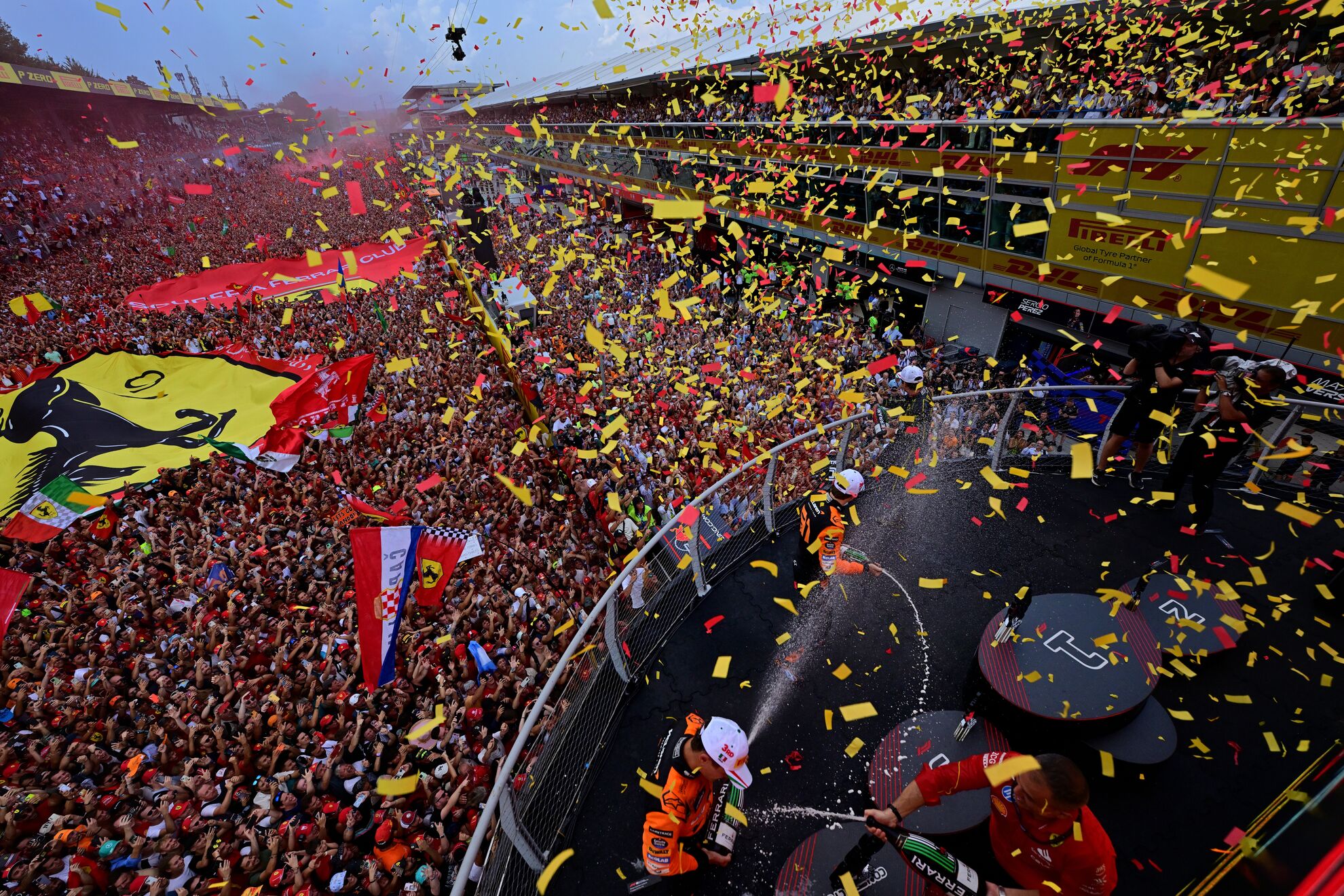
Lando Norris took back-to-back victories either side of the summer break, converting pole position into a commanding win at the final Dutch Grand Prix 2026, ahead of Mercedes pair Kimi Antonelli and George Russell. The afternoon will live in the memory for something else entirely, though. Max Verstappen, who had signed a new Red Bull contract three days earlier, crashed heavily on the opening lap of his final home race, bringing out the red flags and ending Zandvoort’s farewell weekend in the worst possible way for the 105,000 fans in the grandstands.

Sprint Saturday at Zandvoort

Zandvoort hosted a Sprint for the first and only time, and it was George Russell who made the most of it. The Mercedes driver took Sprint pole with a 1m11.567s, edging Norris by just 0.041s in a session where the top four were covered by less than a tenth of a second. Charles Leclerc and Oscar Piastri completed that group, while Antonelli endured a scrappy hour, sliding into the gravel in the opening segment and recovering only to fifth.

Russell converted it into a controlled Sprint victory over the 24-lap distance, holding a comfortable margin as Leclerc swept past Norris on lap 18 for second. It was a timely result for a driver who spent the first half of the season chasing his own team mate in the standings, and a reminder that Mercedes remain the benchmark even on a weekend where their upgrade programme was out of step with their rivals.

Qualifying at Zandvoort

Norris then produced the lap of the weekend. With rain beginning to fall in the closing five minutes and grip disappearing by the corner, the reigning champion improved on his final run to take pole with a 1m11.163s, beating Russell by 0.102s. It was his 18th career pole, his second in a row, and McLaren’s third consecutive Dutch Grand Prix pole.

Antonelli lined up third ahead of Piastri, with Lewis Hamilton and Leclerc next up for a Ferrari that had looked quick in the middle sector all weekend without ever threatening the front row. Verstappen could only manage seventh, with stand-in team mate Liam Lawson an impressive eighth on his surprise return to the senior team. Gabriel Bortoleto and Arvid Lindblad rounded out the top ten, while Carlos Sainz fell at the first hurdle, missing the Q1 cut by 0.022s.

Cadillac, meanwhile, made set-up changes to Sergio Perez’s car under parc fermé conditions, sending him to a pit lane start.
Race Day: Rain, a Red Flag and a Late Charge

A Damp Start and an Opening-Lap Red Flag

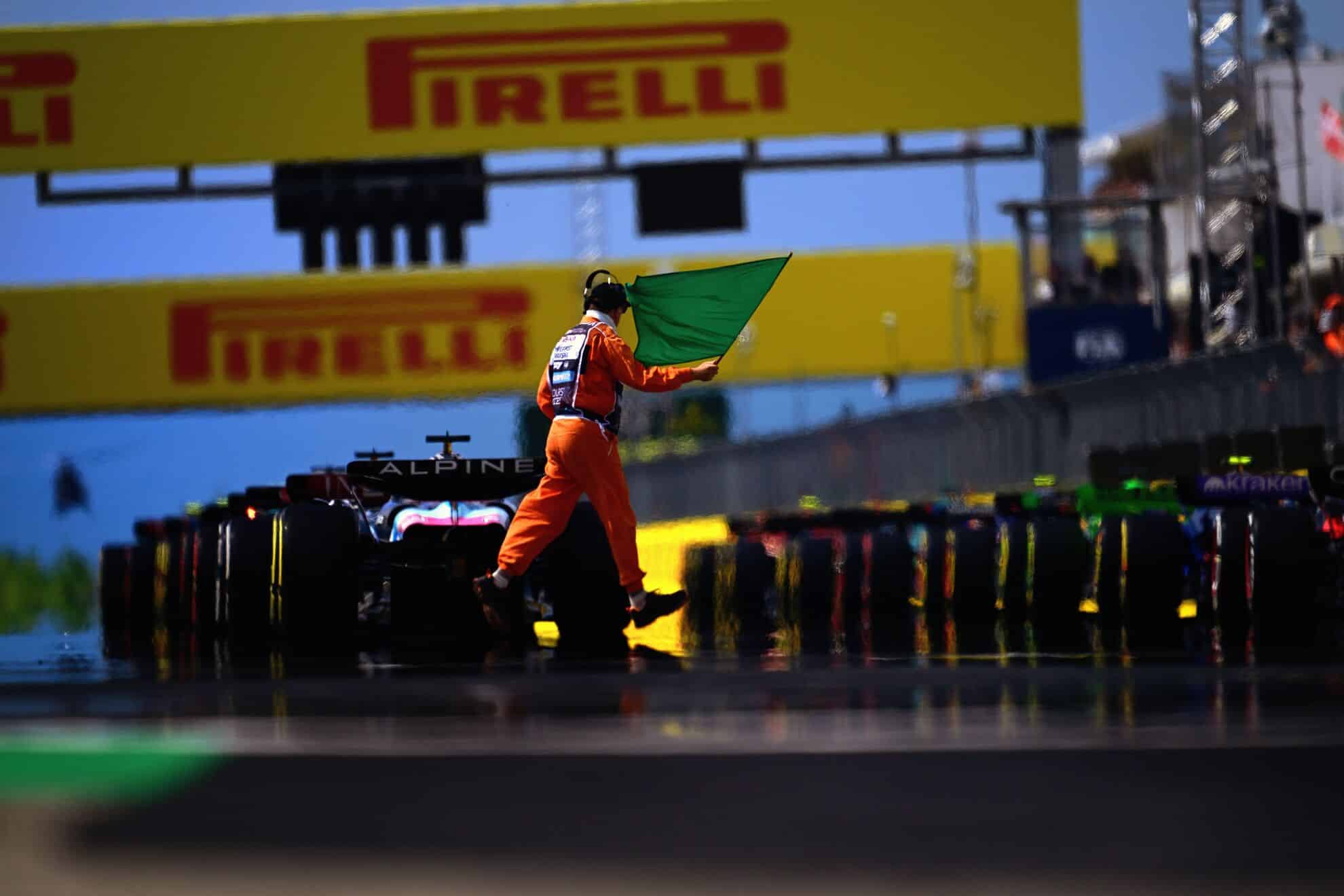
Heavy rain arrived at Zandvoort in the build-up to lights out, easing just in time for the field to gamble on slicks across a track that was still damp in places. The FIA ordered a Safety Car formation lap before releasing the field for a standing start.

Norris held the lead off the line, but Antonelli launched better than Russell to take second into Tarzan. Behind them, Verstappen and Lawson went wheel to wheel, with the four-time champion running wide onto the grass. At the end of the opening lap, Verstappen clipped the white line on the inside of the banked Arie Luyendijkbocht, lost the rear and speared into the outside wall. The impact ripped both left-hand wheels off the car and scattered debris across the racing line, with Lawson and Pierre Gasly both taking evasive action and Bortoleto spinning at the same corner. Verstappen confirmed over the radio that he was unhurt, then apologised to his team. The red flag was inevitable.

The stoppage handed the teams a free tyre change and scrambled the strategies. Norris switched to softs, both Mercedes stayed on mediums and Piastri went to hards. Further chaos followed on the way to the second grid when Oliver Bearman stopped with a technical problem, forcing an additional formation lap.

Antonelli made the better restart and swept past Norris for the lead, with Piastri also getting the jump on Russell. Meanwhile, the stewards handed Lindblad and Franco Colapinto drive-through penalties for yellow flag infringements committed during the red flag period.

Strategy Splits Through the Middle Stint

The middle stint became a strategy puzzle. Russell pitted early and emerged in traffic. Slow stops hurt McLaren, Ferrari and, to a lesser extent, Mercedes. Hamilton stayed out longest of the front-runners and rejoined in clean air with the freshest tyres of the leading group, a decision that gradually pulled him back into contention. Leclerc picked off Piastri around the outside on lap 34, and Hamilton did the same a lap later.

Norris Seizes the Lead at Tarzan

The race turned on lap 54. Antonelli was struggling with his rear tyres and closed to within a second of Hamilton, which activated Overtake Mode and allowed him to defend down the main straight. Norris simply went the other way, sweeping around the outside of Tarzan while Antonelli was hampered by the defending Ferrari, then taking the lead outright when Hamilton ran wide moments later.

Mercedes Swap Places as Hamilton Closes

Esteban Ocon’s stricken Haas triggered a Virtual Safety Car on lap 55, prompting a flurry of pit stops. Antonelli, both Ferraris and Piastri all took fresh softs. Norris and Russell stayed out, betting that their gaps would hold.

For Norris, that bet paid off handsomely. For Russell, however, it did not. With Antonelli and Hamilton closing rapidly in the final ten laps, Mercedes instructed Russell to swap positions with his team mate on lap 66. He complied, but not before telling his engineer he thought the team had thrown away a double podium. Hamilton then spent the closing laps all over the back of the Mercedes, including a desperate lunge at Tarzan that he somehow pulled up short of, but he could never quite find a way through. A second Virtual Safety Car briefly paused the fight while marshals cleared debris from contact between the two Williams cars.

How They Finished

Ultimately, Norris was untroubled at the front and took the flag 11.536s clear. Antonelli finished second, Russell held third by less than a second from Hamilton, and Leclerc was another half a second back in fifth. Piastri came home a lonely sixth.

Lawson claimed seventh on his stand-in appearance despite a ten-second penalty for a yellow flag infringement, with Nico Hulkenberg eighth for Audi. Fernando Alonso banked two valuable points in ninth in the upgraded Aston Martin, holding off Gasly. Yuki Tsunoda was a creditable 11th on his return to the grid, ahead of Lindblad, Bortoleto, Colapinto, Perez and Sainz, the latter picking up a ten-second penalty for causing the Williams collision.

Alex Albon, Valtteri Bottas, Lance Stroll, Ocon, Bearman and Verstappen were the retirements.

F1 standings for 2026

Position Driver Team Wins Podiums Points 
1 Kimi AntonelliMercedes 610242
2 George RussellMercedes26183
3 Lewis HamiltonFerrari15183
4 Lando NorrisMcLaren24159
5 Charles LeclercFerrari 14155
6 Max VerstappenRed Bull0 4112
7 Oscar PiastriMcLaren0 2104
8 Isack HadjarRed Bull0 0 68
9 Liam LawsonRacing Bulls0 049
10 Pierre GaslyAlpine0 1 44

Paddock Gossip

Four More Years of Full Send

The biggest story of the weekend broke before a wheel had turned. On the Thursday, Red Bull confirmed that Verstappen had signed a contract extension through to the end of 2030, going well beyond his existing 2028 deal and ending months of speculation linking him with Mercedes and McLaren.

What made the announcement genuinely surprising was Verstappen’s admission afterwards that a move elsewhere had never really been the alternative. Retirement was. The Dutchman has been openly critical of the 2026 regulations, and it took a series of conversations with Formula 1 and the FIA, plus subsequent tweaks to the cars, to convince him to commit. Reports of the financial terms have circulated widely in the days since, though none have been confirmed by the team, so treat the numbers you have seen with caution.

The timing, three days before he wrote off his car at his home race, was almost cruelly ironic.

Verstappen’s Zandvoort Farewell

Verstappen was measured afterwards, as he tends to be. He explained that the final corner was still wet, that he spotted a dry line forming and got back on the throttle a fraction too eagerly, and that it caught him out. He was also clear that it could have been far worse given he was spun back across the racing line with cars still approaching.

His verdict on the weekend as a whole was blunt: disappointing pace and a disappointing end. It is a strange statistical footnote that he has now retired from all three of his most recent races starting from seventh on the grid.

Hadjar Out, Lawson In, Tsunoda Back

Red Bull’s driver merry-go-round got a fresh spin before the weekend. Isack Hadjar picked up a wrist injury while boxing during the summer shutdown and was ruled out, handing Lawson a return to the senior team for the first time since he was dropped after two rounds at the start of 2025. That in turn opened a Racing Bulls seat for Tsunoda, back in a race car for the first time since Abu Dhabi last year.

Lawson repaid the faith with a points finish and became the first driver to race for Red Bull again having previously been dropped by them. Hadjar is understood to have suffered a minor fracture and is hopeful of returning at Monza.

Mercedes Play the Long Game

The team order that moved Antonelli ahead of Russell in the closing laps was straightforward championship maths, but Russell’s response over the radio was pointed, and he suggested the extra stop had cost Mercedes a double podium. He was more diplomatic afterwards, describing the call as fair. Antonelli, for his part, acknowledged that the additional pit stop had put his team mate in a difficult position too. With the pair now separated by 59 points, this is a conversation Mercedes will be having again.

Ferrari’s Strategy Row

Hamilton was the fastest man on track for long stretches and finished fourth, and he did not hide his frustration. Leclerc held him up for several laps while he carried a significant tyre offset, and when the Monegasque then ignored a call to pit, Hamilton’s sarcastic radio message about wasting time made it onto the world feed. His verdict afterwards was that Ferrari’s tactics, rather than bad luck, cost him a podium. Not the ideal mood music heading into the team’s home race.

The End of an Era

Zandvoort’s return in 2021 was one of modern Formula 1’s great success stories, and its departure is a genuine loss. Attendance passed 300,000 across the weekend, with 105,000 in on race day. Sporting director Jan Lammers published an open letter to fans on Sunday morning reflecting on a project that, by his own admission, only ever succeeded because the romantics refused to give up on it.

Upcoming Races

Formula 1 has a weekend off before a run of races that will shape the championship.

Italian Grand Prix, 4-6 September 2026

Monza hosts the only Italian race on the 2026 calendar, and it arrives loaded. Mercedes have confirmed that Antonelli will take a full power unit change at his home Grand Prix, triggering a grid penalty of at least ten places and potentially a start from the back. Toto Wolff was candid about the logic: Monza offers the best overtaking opportunities of any remaining circuit, so if the penalty has to be taken, it is the least damaging place to take it. Antonelli, who turned 20 during the break, has said the championship comes before sentiment.

Ferrari, meanwhile, are expected to bring a further stage of their power unit recovery programme to their home race. If both things land as anticipated, the Temple of Speed could be pivotal.

Spanish Grand Prix, 11–13 September 2026

The Madring in Madrid rounds out the European season a week later. The part-street circuit around the IFEMA exhibition centre made its debut this year and offers a very different challenge to Monza, with a mix of high-speed sections and tighter city-style corners.

Bahrain Grand Prix in Malaysia, 02–04 October 2026

The Bahrain Grand Prix™ rounds out this stretch, though not in Bahrain. For 2026 only, the race heads to Sepang International Circuit in Malaysia, marking the venue’s first Formula 1® race since 2017. It’s a rare mid-season relocation, and one that gives fans a first look at how the sport’s newest old venue holds up against the current generation of cars.
The History of Wimbledon: From a Croquet Lawn to the World’s Greatest Grand Slam

Wimbledon is the oldest tennis tournament in the world, and almost 150 years after the first ball was struck it remains the sport’s most recognisable stage. What began as a fundraising idea by a struggling croquet club has grown into a fortnight that stops the British summer, fills the grounds at SW19 and reaches hundreds of millions of viewers worldwide. This guide traces the full story: the founding of the All England Club, the first Championships in 1877, the move to Church Road, the arrival of the Open era, the great rivalries, and the modern innovations that have reshaped how the tournament is played and watched. At the end, we look at how Wimbledon debentures fit into that history and how Engage can secure them for The Championships, Wimbledon 2027.

A croquet club in need of a pony roller

The story starts not with tennis but with croquet. The All England Croquet Club was founded in July 1868, at the peak of a Victorian craze for the game, on four acres of leased meadowland off Worple Road in Wimbledon, between the village and the railway line.

Croquet’s popularity did not last. By the mid-1870s the club was struggling, and in 1875 it set aside one of its lawns for a new pastime that had been codified only a year or two earlier by Major Walter Clopton Wingfield. He had originally given it the unwieldy name “sphairistike”. The rest of the world came to call it lawn tennis.

The new game proved far more popular than croquet, and in April 1877 the club renamed itself the All England Croquet and Lawn Tennis Club. It also needed money. The immediate problem was a broken pony-drawn roller used to maintain the lawns, and the solution was to stage a tennis tournament and charge for entry. That decision, taken to cover the cost of a piece of groundskeeping equipment, created the Championships.

558036 Spectators watch the match between Carlos Alcaraz (ESP) and Daniil Medvedev in the semi-final of the Gentlemen's Singles on Centre Court at The Championships 2023. Held at The All England Lawn Tennis Club, Wimbledon. Day 12 Friday 14/07/2023. Credit: AELTC/Jonathan Nackstrand

Wimbledon Debentures 2027

The first Championships, 1877

The inaugural Lawn Tennis Championship opened on 9 July 1877 at Worple Road. Entry was advertised in the sporting magazine The Field, and 22 men paid one guinea each to compete. Only one event was held, the Gentlemen’s Singles, and it was open exclusively to amateurs.

Rain, a theme that would recur for the next 130 years, delayed the final by three days. When it was finally played on 19 July, roughly 200 spectators paid a shilling each to watch Spencer Gore, a 27-year-old rackets player and Surrey cricketer, beat William Marshall 6-1, 6-2, 6-4 in about 48 minutes. Gore’s tactic was to rush the net and volley, a style that some observers of the day considered faintly unsporting. He collected a silver challenge cup valued at 25 guineas and became the first name on a list that now includes almost every great of the sport.

A quirk of those early years was the challenge round, introduced in 1878. The defending champion sat out the tournament entirely and played only the winner of the All Comers’ event to decide the title. That advantage lasted until 1922.

Growing the tournament: 1884 to 1913

Women’s tennis arrived at Wimbledon in 1884, when the Ladies’ Singles was staged alongside a new Gentlemen’s Doubles competition. Thirteen women entered, and Maud Watson became the first ladies’ champion. Ladies’ Doubles and Mixed Doubles followed as full championship events in 1913, completing the five main draws still contested today.

The tournament’s reach widened quickly. May Sutton became the first overseas champion in 1905, and by then the club’s title had settled into its familiar form, having been changed to the All England Lawn Tennis and Croquet Club in 1899. What had started as a local amateur competition was, within three decades, an international occasion.

The move to Church Road in 1922

By 1919 the Championships had outgrown Worple Road. Demand for tickets far exceeded what four acres could accommodate, and the club needed a new home.

The funding mechanism it chose has become part of Wimbledon folklore. In 1920 the All England Club issued its first debentures, raising £100,000 from around 2,000 buyers who each committed £50 for a 25-year instrument. That money helped purchase the Church Road site and build a new stadium: Centre Court.

The relocated Championships opened in 1922, with Gerald Patterson and Suzanne Lenglen taking the singles titles. The same year the challenge round was abolished, meaning defending champions had to play through the draw like everyone else. The original Worple Road ground is now part of Wimbledon High School’s playing fields.

Two world wars and a bombed Centre Court

The Championships were not held during the First World War, from 1915 to 1918, nor during the Second, from 1940 to 1945. Those interruptions remain, along with the cancellation of 2020, the only years since 1877 in which no champions were crowned.

Wimbledon did not escape the war unscathed. In October 1940 a bomb struck Centre Court, destroying around 1,200 seats. The tournament returned in 1946 with the damage still visible, and full repairs were not completed until 1949. Television, meanwhile, had already arrived: the BBC broadcast from Wimbledon for the first time in 1937.

The Open era arrives in 1968

For its first 91 years, Wimbledon was strictly amateur. Champions received trophies and prestige but no prize money, while the best players in the world increasingly turned professional and were barred from competing.

That ended in 1968. Tennis went “open”, professionals were admitted to the Grand Slams, and Wimbledon paid prize money for the first time: a total fund of £26,150, with Rod Laver earning £2,000 as men’s champion and Billie Jean King £750 as ladies’ champion. The disparity in those two figures would take another 39 years to resolve.

The Open era transformed the standard of the draw overnight and set Wimbledon on the path to becoming the commercial institution it is today. To put the change in perspective, the 2026 singles champions each received £3.6 million.

The rivalries that built the legend

Much of Wimbledon’s mystique comes from a handful of matches that transcended the sport.

Djokovic’s era. Novak Djokovic won seven titles at SW19 and, at the 2026 Championships, passed Federer’s record for most Wimbledon men’s singles match wins, reaching 108.

Borg v McEnroe, 1980. Björn Borg won his fifth consecutive title, but the match is remembered for a fourth-set tie-break that McEnroe took 18-16 after saving five championship points. Borg still won in five.

Navratilova’s dominance. Martina Navratilova won nine ladies’ singles titles between 1978 and 1990, a record that stands to this day.

The Sampras years. Pete Sampras claimed seven titles in eight years during the 1990s, on grass that was significantly faster than the surface players face now.

Federer v Nadal, 2008. Widely regarded as the greatest match ever played, decided 9-7 in the fifth as darkness fell. Roger Federer would go on to hold the men’s record of eight singles titles.

Isner v Mahut, 2010. John Isner beat Nicolas Mahut 70-68 in the final set of a first-round match that lasted 11 hours and five minutes across three days, and which prompted a long rethink of final-set rules.

Murray ends the wait, 2013. Andy Murray became the first British men’s singles champion since Fred Perry in 1936, ending a 77-year drought. He won again in 2016.

The modern era: equal pay, roofs and technology

The last two decades have brought more change to Wimbledon than any period since the move to Church Road.

Equal prize money, 2007. Wimbledon became the last Grand Slam to pay men and women equally, following the US Open in 1973, the Australian Open in 2001 and the French Open in 2006. Roger Federer and Venus Williams were the first champions to receive identical cheques.

The Centre Court roof, 2009. After more than a century of rain delays, a retractable roof was installed over Centre Court, allowing play to continue in poor weather and finals to finish on schedule.

No.1 Court rebuilt and covered. A new No.1 Court opened in 1997, and a roof was added in 2019, taking the number of covered seats across the two show courts to around 26,500.

The cancellation of 2020. For the first time since the Second World War, the Championships were called off. The All England Club had held pandemic insurance since the early 2000s, a decision that proved unusually prescient and reportedly resulted in a payout of well over £100 million.

Middle Sunday, 2022. The traditional rest day was abolished and the Championships moved to a full 14 days of play.

Electronic line calling, 2025. After 148 years, line judges were removed from every court and replaced by automated electronic line calling. The distinctive uniforms disappeared, and with them the challenge system.

Video review, 2026. Wimbledon became the third Grand Slam, after the US Open and Australian Open, to adopt video review. Players can ask the chair umpire to review judgement calls such as a not-up, a foul shot or a touch, on Centre Court, No.1 Court and four other show courts. Reviews are unlimited, but line calls themselves remain uncontestable. Visual indicators were also added to scoreboards so spectators can see “out” and “fault” calls as they happen.

Wimbledon today and what comes next

The 2026 Championships, held from 29 June to 12 July, offered a snapshot of the tournament’s scale. The prize fund reached a record £64.2 million, a 20 per cent increase on 2025 and the largest single-year rise in Wimbledon’s history, with each singles champion earning £3.6 million and first-round losers guaranteed £80,000.

On court, Jannik Sinner defended his men’s title, beating Alexander Zverev 6-7(7), 7-6(2), 6-3, 6-4 to become the tenth man in the Open era to retain the trophy. Linda Nosková won her first Grand Slam, defeating fellow Czech Karolína Muchová 6-2, 5-7, 6-3 in an all-Czech final. British wildcard Arthur Fery reached the semi-finals, and Novak Djokovic set his new match-wins record. Full detail is in our Wimbledon 2026 review.

The bigger story, though, is off court. The All England Club has proposed a roughly £200 million expansion into the former Wimbledon Park Golf Club, which it bought in 2018. The plans would add 39 courts, including an 8,000-seat show court, allowing qualifying to be staged on site rather than at Roehampton, and would almost treble the size of the grounds.

Planning permission was granted by the Greater London Authority in September 2024 and upheld by the High Court in July 2025. Campaign group Save Wimbledon Park was subsequently granted permission to take that decision to the Court of Appeal, and a separate High Court ruling in March 2026, which found the land was not subject to a statutory public recreation trust, has also been cleared for appeal. Both challenges were still outstanding at the time of writing. If the project ultimately proceeds, the club expects the development to be ready in the early 2030s.

Frequently asked questions

When did Wimbledon start? The first Wimbledon Championships began on 9 July 1877 at the All England Croquet and Lawn Tennis Club on Worple Road. Only the Gentlemen’s Singles was contested, with 22 entrants, and Spencer Gore won the title.

Why is Wimbledon called Wimbledon? The tournament takes its name from the south-west London district where the All England Club was founded in 1868 and where it has been based ever since, moving from Worple Road to Church Road in 1922.

Who has won the most Wimbledon titles? Roger Federer holds the men’s singles record with eight titles. Martina Navratilova holds the women’s singles record with nine.

Why is Wimbledon played on grass? Grass was the original surface of lawn tennis, and Wimbledon is the only Grand Slam that still uses it. The Australian Open and US Open both moved to hard courts, and the French Open is played on clay.

Why do Wimbledon players wear white? The all-white dress code originates in Victorian etiquette, when visible sweat marks were considered unacceptable. The rule has been retained as a defining tradition, with a minor relaxation from 2023 allowing women to wear dark undershorts.

Has Wimbledon ever been cancelled? Yes, on three occasions. The Championships were not held during the First World War from 1915 to 1918, during the Second World War from 1940 to 1945, or in 2020 because of the COVID-19 pandemic.

When was the Centre Court roof built? The retractable roof over Centre Court was completed and first used in 2009. No.1 Court received its own roof in 2019.

When is Wimbledon 2027? The Championships, Wimbledon 2027 take place from Monday 28 June to Sunday 11 July 2027.

Wimbledon debentures with Engage

Debentures are not a modern add-on to Wimbledon. They are part of how the tournament was built. The 1920 issue funded the purchase of the Church Road site and the construction of Centre Court, and every subsequent series has helped pay for improvements to the Grounds, including the roofs that now cover the two show courts.

The structure has remained recognisable for more than a century. A debenture is a five-year financial instrument issued by the All England Club that entitles the holder to one premium seat for every day of the Championships across that term, together with access to the exclusive debenture restaurants, bars and lounges. Scarcity is built in: there are 2,520 Centre Court debentures and 1,250 for No.1 Court. Crucially, debenture tickets are the only Wimbledon tickets that can legally be transferred or resold, which is why they reach the market at all.

That is where Engage comes in. We buy debenture tickets from registered holders and make individual days available to private and corporate clients, so you do not need to own a debenture to sit in one of these seats. Since 2020 we have sold more than 1,500 debentures across the Championships, with over 25 per cent of those customers travelling from the United States and elsewhere overseas.

For The Championships, Wimbledon 2027, running from 28 June to 11 July, we can offer:

  • Centre Court seating between rows A-N, on the same level as the Royal Box, for every round from the first round through to the Men’s Final
  • No.1 Court seating between rows A-Q for rounds one to four and the quarter-finals
  • Access to the premium debenture lounges, bars and restaurants throughout your day, with no fixed dining schedule
  • A dedicated concierge service and support in choosing the right day and court for your group

Availability is finite and moves quickly, particularly for the second week. If you would like to discuss which day suits your guests, enquire about Wimbledon 2027 debentures or contact the team directly.

The oldest tournament, still setting the standard

Very little about the Championships was inevitable. A croquet club that nearly folded, a tournament staged to buy a roller, a debenture issue that paid for a stadium, and a century and a half of decisions about what to keep and what to change. The result is a fortnight that manages to feel both entirely modern and entirely unchanged, where automated line calling and video review sit alongside white clothing, strawberries and a queue in the park.

That balance is the reason Wimbledon still matters, and the reason a seat on Centre Court remains one of the hardest tickets in sport to find.

England v Pakistan, Lord’s and the Road to the 2027 Ashes

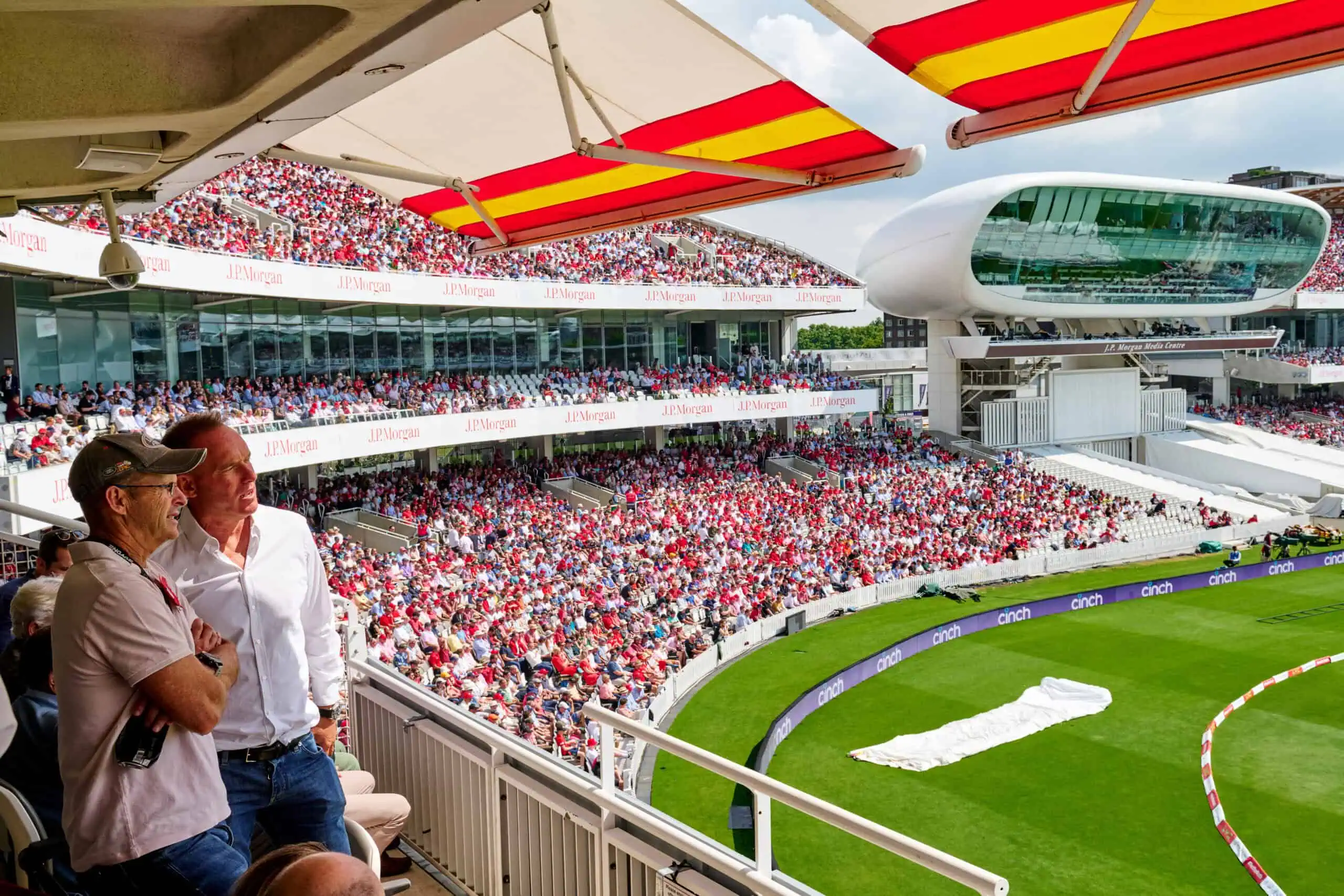
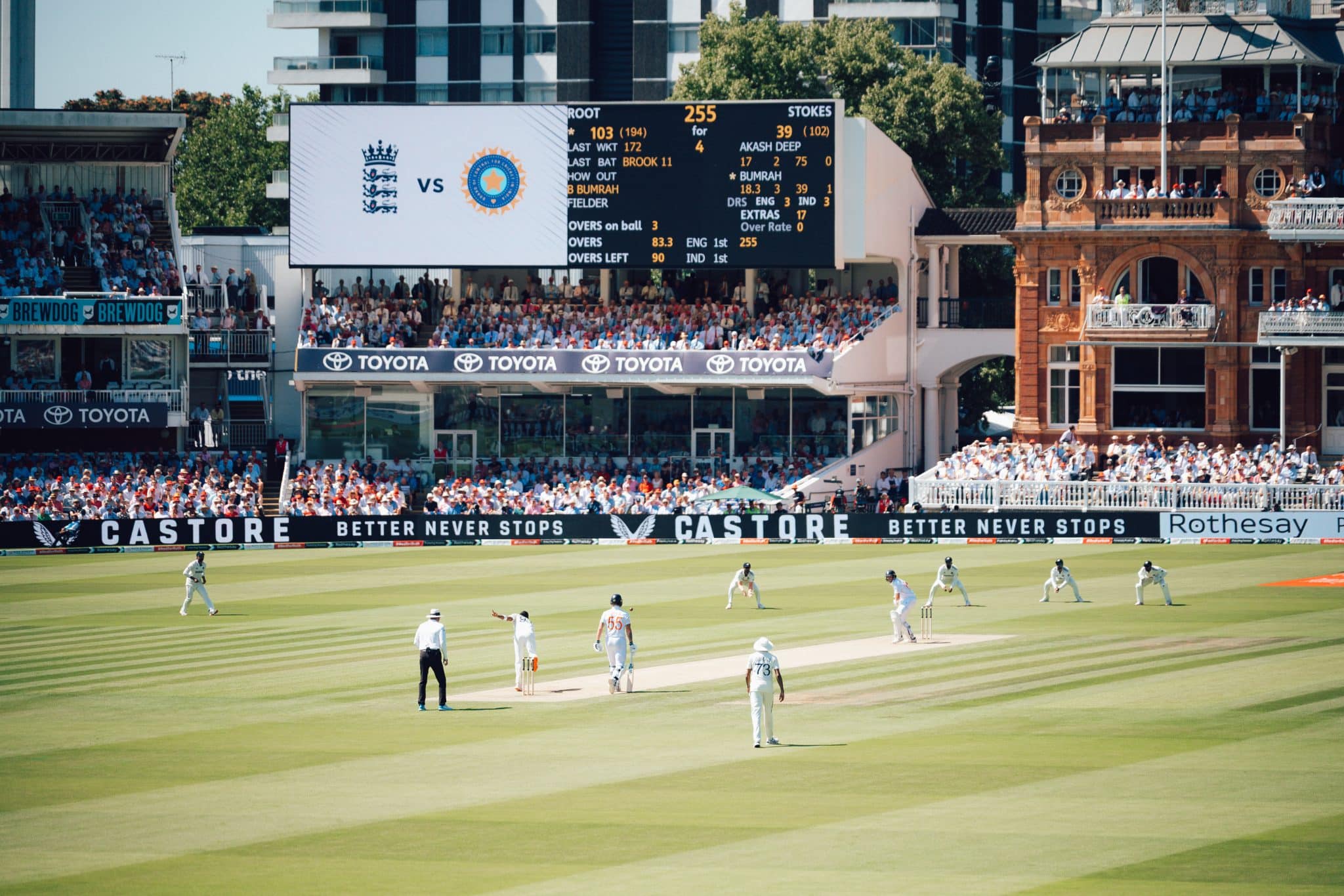
The Hundred wrapped up under the lights at Lord’s on Sunday, England begin a new Test era against Pakistan this week, and Australia have just suffered arguably the most humiliating defeat in their modern history. It is a remarkable moment to be following cricket, and an even better one to be entertaining clients at it. Below we look ahead to the second Test at Lord’s on 27 August, where ICON By Engage will be hosting guests in the Nursery Pavilion, and set out what next summer’s Ashes has in store. If you are planning your cricket hospitality for the rest of 2026 and into 2027, this is where to start.

The Hundred bows out at the Home of Cricket

Finals day at Lord’s on Sunday 16 August closed the sixth edition of The Hundred, and it delivered two very different finals.

In the women’s competition, Trent Rockets were utterly dominant. Ashleigh Gardner’s side bowled out defending champions SunRisers Leeds for 91 before knocking off the target with 46 balls to spare, sealing an eight-wicket win and a maiden title. Sophia Dunkley set the tone with a rapid 41, and Georgia Adams took the individual honours after a superb afternoon with ball and in the field.

The men’s final was far tighter. Manchester Super Giants chased down 159 against Trent Rockets with two balls remaining, thanks to a stunning 72 from 38 balls by Tim Seifert, who also finished as the tournament’s standout performer. It was a first Hundred title for a Manchester franchise in either competition, and it capped a remarkable turnaround from a side who had been staring at elimination only a fortnight earlier.

For anyone who was at Lord’s on Sunday, the atmosphere was a reminder of why the ground works so well as a corporate venue. Two finals, a full house, a genuine occasion, and all of it inside a single afternoon and evening. That same ground now turns its attention to the red ball.

A new England: Root, Fleming and life after Stokes

This is the part of the story that has genuinely changed the shape of English cricket.

Ben Stokes has retired from international cricket. Brendon McCullum’s tenure as Test coach has ended. Joe Root, at 35, has taken the captaincy for a second time, and Stephen Fleming has been appointed as England’s new head coach, with Marcus Trescothick overseeing the Pakistan series on an interim basis before Fleming formally takes charge later in the year.

The catalyst was a difficult summer. England were beaten at home by New Zealand, losing the second and third Tests at The Oval and Trent Bridge after taking the opener at Lord’s. That came on the back of a chastening 4-1 Ashes defeat in Australia over the winter. The Bazball era, for all its entertainment, has closed with England near the wrong end of the current World Test Championship standings.

Root’s squad for the first two Tests reflects a side in transition. Jacob Bethell has been ruled out with a knee injury, opening the door for Jordan Cox at number three. Ollie Pope and Dan Lawrence have both been recalled, Lawrence on the back of an outstanding County Championship season for Surrey, with his off-spin offering partial cover for the all-round balance Stokes used to provide. Jofra Archer, Gus Atkinson, Brydon Carse and Josh Tongue give the attack genuine pace, with Shoaib Bashir the frontline spinner.

Pakistan, meanwhile, arrive with their own upheaval behind them. Babar Azam has returned as Test captain, replacing Shan Masood after a difficult spell in charge. Pakistan will take confidence from their 2-1 home series win over England in late 2024, though at the time of writing Babar’s own availability for the opening Test has been in some doubt due to a finger injury.

Two sides rebuilding, two new captains, and a great deal to play for in the World Test Championship cycle. Series like this often produce the best cricket.

England v Pakistan 2026: the series in full

The three-Test England v Pakistan series runs across late August and into September, forming part of the 2025 to 2027 ICC World Test Championship cycle.

TestVenueDates
First TestHeadingley, Leeds19 to 23 August 2026
Second TestLord’s, London27 to 31 August 2026
Third TestEdgbaston, Birmingham9 to 13 September 2026

Late-season English pitches tend to offer something for everyone. Headingley remains one of the most bowler-friendly grounds in the country when cloud rolls in, Edgbaston brings the loudest crowd in English cricket, and Lord’s sits in between as the occasion.

The Lord’s Test, 27 to 31 August

The second Test at Lord’s is the centrepiece of the series and the final Test match of the summer at the Home of Cricket.

Thursday 27 August gets the match under way, with play scheduled from 11:00 each day through to Monday 31 August. For corporate guests, days one and two typically offer the strongest combination of guaranteed play, a full house and a proper build-up. Days three and four often produce the sharpest cricket as the game turns.

Engage is hosting at Lord’s across the Test through our ICON facility, with packages available for individual days:

Availability at Lord’s is limited for this fixture. If you are considering it, the sensible move is to register interest now rather than closer to the match.

Inside ICON at Lord’s

ICON by Engage at Lord’s is based in the Nursery Pavilion, positioned right alongside the warm-up nets, so guests get a close view of international players preparing before play begins. It is one of the small details that consistently lands well with clients who have been to plenty of hospitality before.

The day includes:

  • Premium reserved seating in the Grand Stand, a short walk from the facility, so guests can move freely between the cricket and the hospitality throughout the day
  • Complimentary premium food and drink from arrival through to close of play
  • Appearances and Q&A from well-known cricketing names, with past ICON events at Lord’s featuring the likes of Stuart Broad, Mark Ramprakash, Ryan Sidebottom, Matt Prior and Glenn McGrath
  • A full day’s entertainment across roughly seven hours of play, which remains one of the strongest arguments for cricket as a client entertainment format

Private boxes holding up to 18 guests are also available at Lord’s for companies wanting an exclusive space with dedicated seating alongside.

Lord’s is straightforward to reach, with St John’s Wood on the Jubilee Line the closest station and Baker Street within comfortable walking distance.

Australia humbled in Darwin: what Bangladesh’s win really means

If you follow Test cricket, you will already know about this. On Sunday 16 August in Darwin, Bangladesh beat Australia by nine wickets.

That sentence still looks odd written down. This was a full-strength Australia side, ranked number one in the world, top of the World Test Championship table, and winners of the vast majority of their recent Tests. Bangladesh were touring Australia for the first time in 23 years, had won only once in 26 attempts in England, Australia, New Zealand and South Africa across their entire history, and had lost their own warm-up fixture by an innings.

Australia were bowled out cheaply twice. Cameron Green’s maiden home Test century, an innings that would ordinarily be the story of the match, only delayed the inevitable, leaving Bangladesh a target of 57. Mehidy Hasan Miraz took a five-wicket haul. Pat Cummins, to his credit, conceded straight afterwards that Bangladesh deserved it.

The reaction in Australia has been swift and unforgiving. Marnus Labuschagne’s place is under real scrutiny after scores of 1 and 31, and there is a broader conversation under way about a top order that England probed without ever quite breaking during the winter Ashes.

Why this matters for 2027. Australia arrive in England next summer as holders, having won the last series 4-1 on home soil. That result told one story. Darwin has told a rather different one. A batting line-up that struggled against disciplined, patient, medium-paced accuracy on a good pitch is going to face something considerably more challenging when the Dukes ball starts moving at Trent Bridge in June. England will have watched that Test with real interest.

Australia have a second Test in Darwin to respond, and they have earned enough credit over recent years that one result should not be over-read. But cracks that have been talked about for a while are now visible to everyone.

The 2027 Ashes: dates, venues and the Lord’s Test

The ECB has confirmed the full schedule for the 2027 Rothesay Men’s Ashes Series, and England will be desperate to reclaim the urn after that 4-1 defeat Down Under.

TestVenueDates
First TestTrent Bridge, Nottingham18 to 22 June 2027
Second TestLord’s, London30 June to 4 July 2027
Third TestEdgbaston, Birmingham8 to 12 July 2027
Fourth TestThe Utilita Bowl, Southampton21 to 25 July 2027
Fifth TestThe Kia Oval, London29 July to 2 August 2027

Three points stand out from that schedule.

Lord’s lands in the middle of the Wimbledon fortnight. The second Test from 30 June to 4 July sits squarely in the busiest week of the London sporting summer. For companies building a summer entertaining programme, that is either a scheduling headache or a genuine opportunity, depending on how early you plan.

Southampton hosts its first men’s Ashes Test. The Utilita Bowl becomes only the tenth British ground to stage an Ashes Test, which makes the fourth Test a genuine one-off for anyone who collects sporting firsts.

There is no northern venue. Old Trafford and Headingley were not selected for 2027, a decision that drew criticism at the time and one Ben Stokes himself described as a shame during last winter’s series. Both grounds are confirmed for the 2031 series instead.

Alongside the men’s series, the women’s Ashes runs concurrently through June and July, opening with a one-off Test at Headingley on 24 June. The Oval also stages the World Test Championship final from 9 to 13 June, before the international summer opens with a five-match ODI series against Pakistan in May and a one-off Test against Bangladesh at Lord’s from 28 May.

Ashes hospitality is always the fastest-moving cricket product in our calendar, and the Lord’s Test in particular tends to sell out first. Registering interest early is genuinely worthwhile.

Secure your place

Whether it is the Lord’s Test this month or the Ashes next summer, cricket remains one of the most effective client entertainment formats available. A full day of play, a relaxed setting and genuine time to talk.

Browse our cricket hospitality or get in touch with the team to discuss packages.

Frequently asked questions

When is the England v Pakistan Test at Lord’s? The second Test of the 2026 series runs from Thursday 27 August to Monday 31 August, with play starting at 11:00 each day. It is the final Test of the English summer at Lord’s.

When is the England v Pakistan Test at Lord’s? The second Test of the 2026 series runs from Thursday 27 August to Monday 31 August, with play starting at 11:00 each day. It is the final Test of the English summer at Lord’s.

What is included in a Lord’s cricket hospitality package? Packages through ICON by Engage typically include premium reserved seating in the Grand Stand, complimentary food and drink throughout the day, access to the ICON facility in the Nursery Pavilion, and appearances from well-known cricketing figures. Private boxes for up to 18 guests are also available.

Can I book hospitality for a single day of a Test match? Yes. You can select individual days of a Test, as well as limited-overs internationals and Hundred fixtures, depending on availability.

When is the Lord’s Ashes Test in 2027? The second Test of the 2027 Ashes takes place at Lord’s from Wednesday 30 June to Sunday 4 July 2027.

Where are the 2027 Ashes being played? The five Tests will be staged at Trent Bridge, Lord’s, Edgbaston, the Utilita Bowl in Southampton and The Kia Oval. Southampton hosts its first men’s Ashes Test, and no northern venue features in the 2027 series.

How far in advance should I book Ashes hospitality? Ashes packages move faster than any other cricket fixture in the calendar, and the Lord’s and Oval Tests are typically the first to sell out. Registering interest as early as possible is strongly advised.

Who is England’s Test captain in 2026? Joe Root has taken over as Test captain following Ben Stokes’ retirement from international cricket, beginning his second spell in the role with the Pakistan series.

Premier League 2026/27 Season Preview: Title Contenders, Big Signings and Teams to Watch

The 2026/27 Premier League season begins on Friday 21 August, and it arrives with more genuine uncertainty than any campaign in recent memory. Arsenal are champions for the first time since 2004 and start as favourites to go back to back. Manchester City begin life after Pep Guardiola. A record nine clubs open the season with a new permanent manager. Add a summer transfer window that has already produced two British record fees and you have a league that looks wide open from top to bottom. Here is everything you need to know for Premier League 2026/27 Season before the first whistle, including where to secure football hospitality for the fixtures that matter most.

Community Shield: Arsenal lay down a marker

The season’s traditional curtain-raiser took place on Sunday 16 August at the Principality Stadium in Cardiff, the first time the fixture has been staged outside Wembley since 2006. Arsenal, as reigning league champions, faced FA Cup holders Manchester City. What followed was about as emphatic a statement as the Gunners could have made.

Riccardo Calafiori put Arsenal ahead inside twenty-four seconds. Kai Havertz headed a second past Gianluigi Donnarumma on twenty-eight minutes, and Martin Ødegaard added a third shortly after the interval, running into the area unchallenged before dummying the goalkeeper and rolling into an empty net. Arsenal won 3-0, and Ødegaard lifted the trophy.

Two things stood out. The first is Arsenal’s continuity: this is essentially the same squad that won the league, sharpened rather than rebuilt, and they looked ready from the opening seconds. The second is the scale of the task facing Enzo Maresca. This was his first competitive fixture as Manchester City head coach, and the post-Guardiola era began about as awkwardly as it could have.

A word of caution, though. The Community Shield is a notoriously unreliable predictor. City open their league campaign at home to Bournemouth and will have a very different look about them by October. But as an early temperature check on the two clubs most likely to contest the title, it was informative.

Key dates for the 2026/27 season

The campaign starts a week later than usual to allow recovery time after the expanded FIFA World Cup, which concluded on 19 July.

  • Friday 21 August 2026 Season opener: Arsenal v Coventry City, Emirates Stadium, 20:00 BST
  • Tuesday 1 September 2026 Summer transfer window closes, 23:00 BST
  • Saturday 26 December 2026 Boxing Day fixtures
  • Sunday 30 May 2027 Final day, all matches kicking off at 16:00

The season comprises thirty-three weekend rounds and five midweek rounds. Nine English clubs are competing in UEFA competitions, which will stretch squads across the winter months.

A record summer of managerial change

  • Manchester City: Enzo Maresca replaces Pep Guardiola, who stepped down after a trophy-laden decade
  • Liverpool: Andoni Iraola takes over following Arne Slot’s departure
  • Chelsea: Xabi Alonso begins his Premier League managerial career
  • Newcastle United: Matthias Jaissle arrives from Al-Ahli after Eddie Howe stepped down in late July
  • Tottenham Hotspur: Roberto De Zerbi, appointed in March, gets his first full season
  • Nottingham Forest: Oliver Glasner takes charge at the City Ground
  • Bournemouth: Marco Rose steps in for the departing Iraola
  • Fulham: Álvaro Arbeloa succeeds Marco Silva after five seasons
  • Crystal Palace: Pierre Sage arrives from Lens

Mikel Arteta is now the longest-serving manager in the division, which tells you plenty about the turnover. The traditional “new manager bounce” theory is about to face its most rigorous test, with three opening-weekend fixtures pitting new appointments directly against each other.

The biggest signings of the summer window

Spending has been extraordinary again, and unusually, much of it has been between Premier League rivals. The window does not close until 1 September, so there is still time for late drama.

Chelsea break the British record

Chelsea’s £117 million capture of Morgan Rogers from Aston Villa is the headline deal of the summer. Rogers becomes the most expensive English player in history on a seven-year contract, a striking piece of business given Chelsea finished tenth last season and have no European football. Maxence Lacroix has also arrived from Crystal Palace as Xabi Alonso reshapes the squad.

Manchester City smash their own record

City paid a club-record fee reported at around £116 million to sign Elliot Anderson from Nottingham Forest, briefly making him the most expensive British footballer ever before Rogers surpassed him weeks later. It is a substantial commitment to Maresca’s midfield rebuild.

Tottenham break their record twice

Spurs have been the summer’s most aggressive spenders, committing well over £200 million. They broke their transfer record for Mateus Fernandes, then broke it again days later for Sandro Tonali, who joined from Newcastle in a deal reported at roughly £100 million. Centre-back Jan Paul van Hecke arrived from Brighton, with free transfers for Marcos Senesi and Andy Robertson completing a significant overhaul under De Zerbi.

Arsenal go for experience

The champions moved for Bruno Guimarães, signing the Newcastle captain for a fixed £75 million on a four-year deal with a further option. Piero Hincapié, Christos Tzolis and goalkeeper Illan Meslier have also arrived. Leandro Trossard, Christian Nørgaard and Jakub Kiwior have departed. Measured strengthening rather than reinvention, which is arguably the point.

Newcastle’s difficult summer

Newcastle have sold more than £240 million of talent. Guimarães went to Arsenal, Tonali to Tottenham and Anthony Gordon to Barcelona for £69.3 million. Eddie Howe left too. Jaissle inherits a squad in transition with three weeks of preparation.

Elsewhere

Leeds United did quiet, sensible business for Harry Wilson, James Trafford and Tarik Muharemović

Aston Villa broke their own record for Freiburg’s Johan Manzambi, and added João Gomes plus Alejandro Garnacho on loan, offsetting the loss of Rogers and Youri Tielemans

Manchester United signed Andrey Santos from Chelsea for £50 million and Tielemans from Villa for £36 million, while moving on Rasmus Højlund, Casemiro and Jadon Sancho in a genuine squad reset

Liverpool added Spain World Cup winner Víctor Muñoz, French defender Jérémy Jacquet, and Ronald Araújo on loan from Barcelona

Brighton paid around £50 million to bring Luka Vušković back from Tottenham

Who will push for the title?

Arsenal

The champions are favourites, and deservedly so. Arteta’s side finished on eighty-five points last season, seven clear of City, and ended a twenty-two-year wait for the trophy. The squad is young, settled and now carries none of the psychological baggage that dogged previous near-misses. Guimarães adds a leader and a genuine upgrade in central midfield.

The historical caveat is worth noting: Arsenal have not successfully defended an English league title since their run of three consecutive championships in the 1930s. There is also the question of whether a deep Champions League run, following last season’s final defeat to Paris Saint-Germain on penalties, stretches them thin.

Manchester City

The obvious threat, and the market’s second choice. City finished second on seventy-eight points, won the FA Cup and the EFL Cup, and Erling Haaland was again the division’s top scorer with twenty-seven goals. Maresca learned under Guardiola and the handover should be smoother than most, though the Community Shield suggested the adjustment period is real. Anderson is a significant addition. If City click by autumn, they will be there in May.

Liverpool

Fifth last season with sixty points, which represented a substantial drop from their title-winning campaign the year before. Iraola arrives with a clear, high-intensity pressing identity and a squad that still contains Alexander Isak and Mohamed Salah. The recruitment has been targeted rather than lavish. If Iraola’s system takes quickly, Liverpool could compress the gap fast.

Manchester United

Third last season with seventy-one points, and they finished the campaign playing like a top-two side, including a win at the Emirates. Bruno Fernandes registered twenty-one assists, a Premier League record. Champions League football returns, which cuts both ways: prestige and revenue, but a considerably heavier workload. The market has them fourth favourites, and several analysts think that undersells them.

Chelsea

Tenth last season, no European football, and yet they have spent like a club that expects to be back in the top four immediately. Alonso’s pedigree is not in question after an unbeaten Bundesliga title with Leverkusen, though his short Real Madrid spell raised questions about managing elite egos. The lack of midweek fixtures is a genuine competitive advantage over their rivals.

The verdict: Arsenal and City look a tier above, with United, Liverpool and Chelsea capable of gatecrashing if things break their way. Aston Villa, fourth last season and Europa League winners under Unai Emery, should not be discounted either.

Underdogs and dark horses to watch

This is where the season gets interesting. Last term proved the established order is more porous than it used to be.

Nottingham Forest

Perhaps the most compelling pick. Forest churned through four managers last season and still survived comfortably, and Oliver Glasner now inherits a squad that suits his system, particularly at wing-back and in the final third. Crucially, they have no European commitments and can focus entirely on the league. The loss of Elliot Anderson hurts, but the fee gives them room to reinvest.

Sunderland

The story of last season. Newly promoted, they finished seventh with fifty-four points and qualified for the Europa League, beating Chelsea on the final day to leapfrog Newcastle. The question now is whether they can manage Thursday-to-Sunday football without their league form suffering. The bookmakers are sceptical. Sunderland have made a habit of proving people wrong.

Bournemouth

Sixth last season with fifty-seven points and Europa League qualification, achieved with the longest unbeaten run in the division at eighteen matches. Losing Iraola to Liverpool is a real blow, but Marco Rose brings a high-intensity approach from RB Leipzig and Borussia Dortmund that should not require a total philosophical reset.

Crystal Palace

Conference League winners in 2026 and Community Shield holders coming into this summer, Palace nonetheless finished fifteenth in the league. Pierre Sage arrives having pushed PSG close with Lens and won the Coupe de France. There is a squad here capable of a considerably higher finish if the cup form translates.

Brighton & Hove Albion

Eighth in each of the last two seasons and now in the Conference League, Fabian Hürzeler’s side continue to do what Brighton do: identify talent early and sell high. Bringing Vušković back is a statement of intent.

Brentford

Rarely mentioned in these conversations and always somewhere near the top ten. Long odds, sound structure, and a habit of taking points off the big clubs.

The promoted clubs

Coventry City return to the top flight after twenty-five years away, having won the Championship under Frank Lampard. They open the season away at Arsenal, which is about as difficult a start as the computer could have produced, but this is a side that arrives with momentum rather than fear.

Ipswich Town bounced back at the first attempt, finishing second. They begin at home to Sunderland, a fixture that may prove more instructive about their survival prospects than anything else in the opening month.

Hull City came up through the play-offs, beating Middlesbrough in the final, and return to the Premier League for the first time since 2016/17. They host Manchester United in the opening Saturday lunchtime fixture. The bookmakers have them as favourites for the drop, which is exactly the sort of thing promoted clubs enjoy disproving.

Engage’s League table projection

PosTeam
1Arsenal
2Manchester City
3Manchester United
4Liverpool
5Sunderland
6Aston Villa
7Chelsea
8Bournemouth
9Brentford
10Everton
11Brighton
12Tottenham
13Crystal Palace
14Fulham
15Nottingham Forest
16Newcastle United
17Coventry City
18Leeds United
19Ipswich Town
20Hull City

Fixtures worth booking early

Demand for hospitality at marquee fixtures typically outstrips supply well before the games themselves come into view. The matches likely to move fastest this season include:

Corporate hospitality remains the most reliable route to premium seating at these fixtures, particularly for clients and partners who expect a full matchday experience rather than a ticket alone.

Football Hospitality: Premier League Hospitality | FA Cup Hospitality | Carabao Cup Hospitality | International Football Hospitality

Frequently asked questions

When does the 2026/27 Premier League season start? The season begins on Friday 21 August 2026, with champions Arsenal hosting newly promoted Coventry City at the Emirates Stadium at 20:00 BST. The campaign concludes on Sunday 30 May 2027, when all twenty clubs play simultaneously with a 16:00 kick-off.

Who won the 2026 FA Community Shield? Arsenal beat Manchester City 3-0 at the Principality Stadium in Cardiff on Sunday 16 August 2026. Riccardo Calafiori, Kai Havertz and Martin Ødegaard scored.

Who are the favourites to win the Premier League in 2026/27? Arsenal start as favourites having won the title last season with eighty-five points. Manchester City are the closest challengers in the betting, with Liverpool, Manchester United and Chelsea making up the chasing pack.

Which teams were promoted to the Premier League for 2026/27? Coventry City won the Championship, Ipswich Town finished second, and Hull City came up through the play-offs. They replace West Ham United, Burnley and Wolverhampton Wanderers.

What is the biggest transfer of the summer 2026 window? Chelsea’s signing of Morgan Rogers from Aston Villa for a reported £117 million, which makes him the most expensive English player in history. The window closes at 23:00 BST on 1 September 2026.

How can I book Premier League hospitality? Engage offers official hospitality packages at a range of Premier League clubs for the 2026/27 season, including premium seating, dining and lounge access. Availability at the biggest fixtures is limited, so early enquiry is recommended. Get in touch with our team to discuss options.

Engage Announces New Partnership with Bicester Village  

Engage are proud to announce a new partnership with Bicester Village, one of the UK’s most prestigious luxury shopping destinations, extending our commitment to giving clients access to the very best experiences beyond the events themselves.  

Located in the Oxfordshire countryside and less than an hour from London, Bicester Village is home to more than 150 boutiques of world-leading fashion and lifestyle brands, all within a beautifully landscaped, open-air village. Part of The Bicester Collection, it has built a global reputation for combining designer names with exceptional service and a refined, relaxed atmosphere.  

Through this partnership, Engage clients can now enjoy a special treat when they visit.  

Guests of ICON by Engage will enjoy a curated suite of VIP benefits during their visit. From Personal Shopping and boutique appointments to reserved parking and Hands-free Shopping, every detail is designed to make a day at Bicester Village feel as considered and seamless as the events we deliver.  

This collaboration reflects the standards our clients have come to expect from Engage. We have built our reputation on connecting people with the world’s most sought-after sporting, entertainment and lifestyle experiences, and our partnership with Bicester Village adds a new dimension to that offering.  

Whether you are joining us at a Formula 1® weekend, a major football final, Wimbledon or beyond, this partnership is part of our ongoing commitment to creating memorable moments at every stage of the experience.  

To find out more about the benefits available to Engage clients at Bicester Village, please get in touch with our Partnership team.   

Why a Concert Hospitality Experience is the Wildcard Your Client Entertainment Strategy is Missing

Most client entertainment strategies are built almost entirely around sport. A Premier League fixture here, a day at the cricket there, a golf day in the summer. It works, but it’s also exactly what every one of your competitors is doing. Live music is the option most companies overlook, and it’s the one guests remember longest. A stadium show at Wembley, an arena night at The O2, or an intimate evening at the Royal Albert Hall gives you something a match can’t: an experience with no losing side, no tribal loyalties and no dependence on the result. Below, we break down why concert hospitality deserves a permanent line in your entertainment budget, how to choose the right show for your guest list, and what to get right before you book.

The problem with a sport-only entertainment strategy

Sport is the default for good reason. The calendar is predictable, the audience is broad, and the format is familiar to anyone who has ever hosted a client.

But familiarity is precisely the issue. If your key account has been to four Premier League games this season on four different suppliers’ invitations, your fifth is not an event. It’s a Tuesday. Differentiation in client entertainment isn’t about spending more. It’s about offering something the guest isn’t already being offered.

There’s a second, quieter problem. Sport asks your guests to have an allegiance. Invite a mixed group to a football match and roughly half the room is either indifferent or actively supporting the other side. Music doesn’t work like that.

What concert hospitality actually includes

Concert hospitality is a broad category, and packages differ significantly by venue and by act. Broadly, though, most experiences are built from the same components:

  • Premium seating or a private box with a clear, elevated view of the stage
  • Pre-show dining or a drinks reception, often with a champagne welcome
  • Access to a private lounge or suite away from the main concourse
  • A complimentary or hosted bar across the evening
  • Dedicated entry and, at some venues, dedicated parking
  • A host on the night to manage the group so you don’t have to

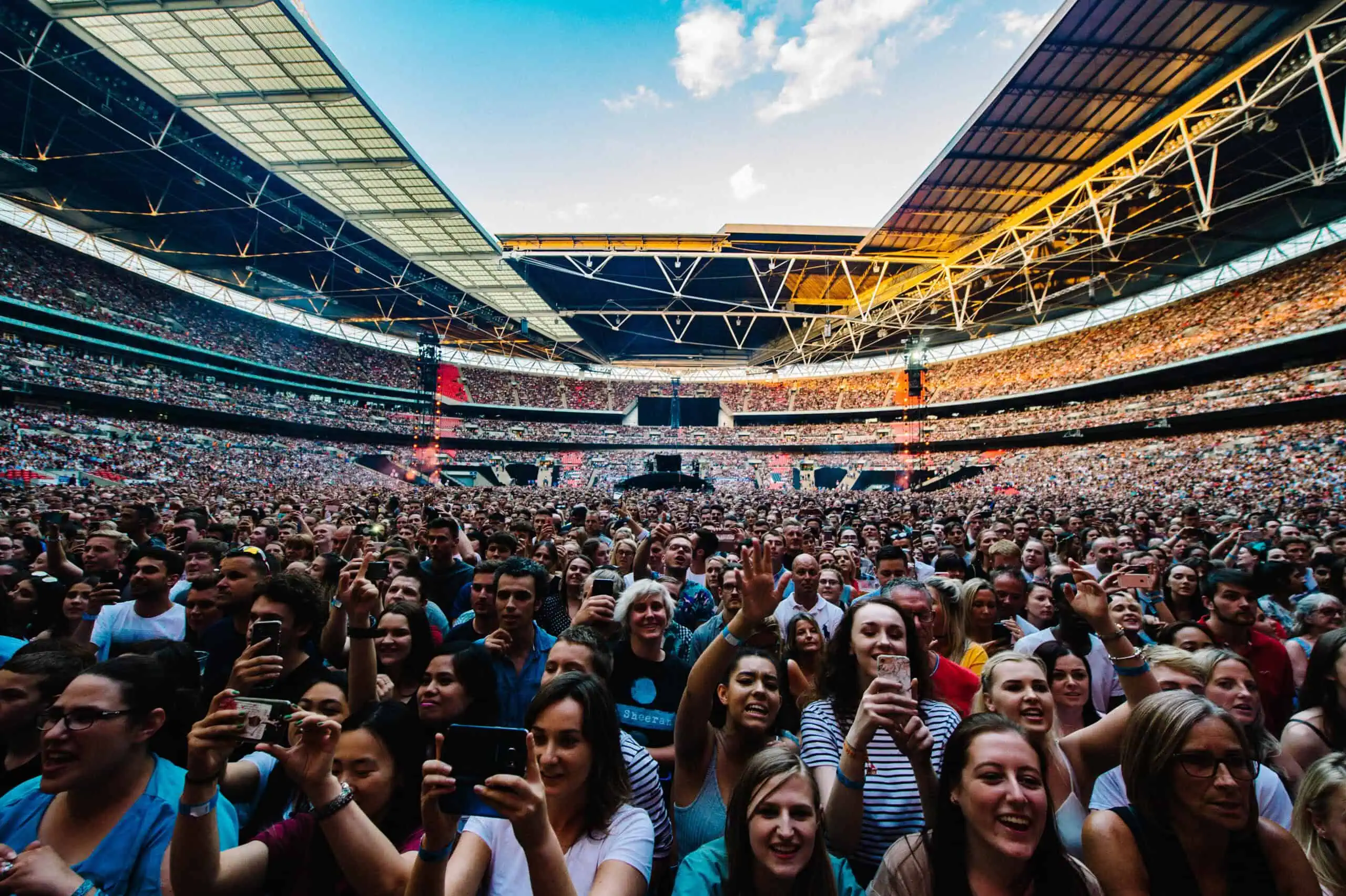
The practical effect is that you spend the evening talking to your guests rather than queuing with them. At stadium scale that difference is enormous. Ninety thousand people all arriving and leaving at once is a genuinely testing experience without hospitality, and a very comfortable one with it.

(Inclusions vary by venue, act and package tier, so always check the specific package detail.)

Music Event Diary

Neutral ground: nobody’s team loses

This is the single strongest argument for concerts as a client entertainment tool, and it’s the one most often missed.

A concert has no opposition. Nobody in your box is quietly hoping the other side wins. There’s no awkward moment when your guest’s team concedes in the 89th minute and the conversation dies. Everyone in the room wants the same outcome from the evening, which is a surprisingly useful thing when you’re trying to build rapport with someone you don’t know well.

It also removes a small but real risk in relationship-building: getting the invitation wrong. Inviting a lifelong Liverpool supporter to a hospitality box at a rival ground is a misstep. Inviting them to a show they’ve mentioned wanting to see is not.

It works for a mixed guest list

Most client entertainment fails at the same point: the guest list isn’t homogeneous.

You’re often hosting a group that spans a procurement lead in their fifties, a technical manager in their thirties, and a partner or spouse who has been invited along and has no professional stake in the evening at all. Sport tends to reward the enthusiasts in that group and leave everyone else politely waiting for the interval.

Music travels better across that spread:

Multi-generational groups are straightforward. Legacy acts and heritage tours in particular tend to land across a wide age range.

Partners and spouses are far easier to include. A concert is a genuinely appealing evening out rather than an obligation, which changes the tone of the whole invitation.

International clients aren’t excluded. A visiting client may have no relationship with cricket or rugby. Global touring artists need no explanation.

It works across seniority. The same evening can suit a board-level guest and a junior member of the account team, which is useful when you’re using hospitality for internal reward as well as client entertainment.

The show always delivers

Sporting hospitality carries an inherent risk you can’t price out: the event itself might be poor. A goalless draw in the rain, a Test match washed out by lunch on day two, a title race already decided by the time your fixture arrives.

A concert is a rehearsed, professionally produced performance designed to be excellent every night. The set list, the production, the lighting and the pacing are all built to deliver a peak experience. You are not gambling on form.

That reliability matters when the evening is carrying commercial weight. If you’ve invited a prospect you’ve spent eight months trying to reach, you want an event that performs regardless of circumstance.

Scarcity does the persuading for you

Major tours sell out in minutes. That’s an inconvenience for the general public and an advantage for you.

When an invitation is to something a guest has already tried and failed to get tickets for, the value of the gesture is immediately obvious, with no explanation required. It signals effort, access and thought in a way that a general-admission fixture simply doesn’t. Hospitality availability for high-demand shows also tends to persist a little longer than the general sale, which is often the only remaining route in once a tour has sold out.

Concerts fill the gaps in the sporting calendar

There’s a straightforward practical case here too. Sporting hospitality clusters around the domestic season, the summer Tests and the autumn internationals, and leaves holes in between.

Live music is close to a year-round complement:

  • Stadium season runs roughly May to September, filling the summer gap when the football calendar is dormant.
  • Arena season runs across autumn, winter and spring, giving you options in the quieter weeks either side of Christmas.
  • Awards nights and festivals add a further set of fixed dates for the annual plan.

Used properly, concerts let you maintain contact with key accounts across twelve months rather than concentrating everything into a handful of crowded weeks.

Choosing the right show for your guests

The wildcard only works if you play it well. A few practical filters:

Start with the guest, not the act. The best invitation is one where the guest has mentioned the artist, the era or the genre unprompted. Small details from previous conversations are worth more here than any general recommendation.

Match the scale to the relationship. A stadium show is a spectacle: high energy, huge production, and brilliant for a group or a celebratory occasion. An arena or concert hall evening is more contained and better suited to conversation, which makes it stronger for one or two important guests where the point is the discussion rather than the scale.

Consider geography honestly. A London show is easy for London-based clients and a significant ask for a client in Manchester or Liverpool. Regional venues are frequently the better choice for regional accounts, and the gesture reads as more considerate.

Think about the room, not just the music. Where the private space actually sits, what the sightlines are, and how much of the evening is hosted matter as much as the headline name.

Book earlier than you think you need to. Hospitality allocations for the biggest tours are finite and go early. Registering interest before a tour is confirmed is genuinely the difference between securing the show you want and taking whatever is left.

Want to add live music to your entertainment plan?

Engage arranges official concert and music hospitality at the UK’s most iconic venues, from stadium tours to arena nights and awards ceremonies. Whether you’re hosting two guests or twenty, we’ll help you match the right show to the right guest list.
Explore concert hospitality

Where to host: venues at a glance

Wembley Stadium

The UK’s largest venue and a stage only genuine global headliners get to fill. If the objective is spectacle and a story your guest retells for years, this is the top of the market. Wembley hosts music alongside football, boxing and NFL, and hospitality here is a considerable step up from general admission given the sheer scale of the crowd.
Wembley hospitality

The O2 Arena

London’s flagship indoor arena in Greenwich, and one of the busiest entertainment venues in the world. The great strength of The O2 for client entertainment is its variety, with music, comedy, boxing, darts, tennis and basketball all under one roof, plus the reliability of an indoor, all-weather venue. The scale is intimate enough that conversation works.
O2 Arena concert hospitality

Royal Albert Hall

The choice when you want understatement rather than spectacle. Extraordinary acoustics, genuine architectural occasion, and a programme spanning orchestral performances, film scores in concert and one-off shows from major artists. Ideal for senior guests and for evenings where the point is the conversation.
Royal Albert Hall concerts

Final thoughts

Sport will always be the backbone of corporate hospitality, and it should be. But a strategy built exclusively on sport has predictable blind spots. It excludes the guests who don’t follow it, it depends on results you can’t control, and it puts you in a queue behind everyone else pitching the same account.

Live music covers all three gaps. It’s neutral, it’s reliable, it works for a mixed guest list, and it fills the parts of the year the sporting calendar leaves empty. That’s not a reason to replace what’s already working. It’s a reason to add the one card your competitors have left in the deck.

If you’d like to build live music into your entertainment plan for the year ahead, explore our concert hospitality packages or get in touch with the Engage team to talk through your guest list.

Biggest Sporting Events of 2027

2026 delivered one unforgettable sporting moment after another, but 2027 is shaping up to be even bigger. It’s a year that takes in a Rugby World Cup Down Under, a full home Ashes summer, the first FIFA Women’s World Cup ever staged in South America, the Ryder Cup’s centenary edition on Irish soil, and, as always, a fortnight of grass-court drama at SW19.

Whether you’re planning a client entertainment calendar or your own once-in-a-lifetime trip, here’s everything confirmed so far for the biggest sporting events of 2027, and why you’ll want to book early.

Rugby World Cup 2027

Rugby’s showpiece heads back to Australia for the first time in 25 years, and it’s arriving bigger than ever. The Men’s Rugby World Cup 2027 runs from 1 October to 13 November, expanding to 24 teams and 52 matches for the first time, spread across seven host cities: Adelaide, Brisbane, Melbourne, Newcastle, Perth, Sydney and Townsville.

The tournament kicks off with the hosts, Australia, facing Hong Kong China at Perth Stadium on 1 October, before the action builds through pool play, a round of 16, and knockout rounds culminating in the final at Stadium Australia in Sydney on 13 November. South Africa arrive as two-time defending champions after beating New Zealand in the 2023 final, while England, France, Ireland, Argentina and hosts Australia are among the automatic qualifiers looking to dethrone them.

It’s part of what Rugby Australia has called a “golden decade” for the sport in the country, sitting alongside the British & Irish Lions tour and building towards the Women’s Rugby World Cup 2029 and Brisbane 2032 Olympics. With over 750,000 tickets already snapped up in the initial sales phase, demand for the biggest edition of the tournament in history is only going one way.

Explore our Rugby hospitality packages →

The Ashes 2027

Cricket’s oldest rivalry returns to English soil for a five-Test series running 18 June to 2 August 2027, and England will have a score to settle. After a heavy 4-1 defeat away in Australia over the 2025-26 winter, Joe Root’s side will be desperate to reclaim the urn on home turf.

The series opens at Trent Bridge in Nottingham on 18 June, before moving to Lord’s (30 June), Edgbaston (8 July), and then a landmark moment for the Utilita Bowl in Southampton, which stages its first-ever men’s Ashes Test from 21 July. The series concludes, as it always does, at The Oval from 29 July.

Cricket fans will have their hands full that fortnight regardless, since the Lord’s Test overlaps with the middle of Wimbledon, and a concurrent Women’s Ashes series gets underway at Headingley on 24 June, giving England Women a shot at ending Australia’s dominance in that rivalry too. Few sporting rivalries carry the weight and theatre of the Ashes, and a home series with a losing side eager to respond is exactly the kind of summer that sells out.

Explore our Cricket hospitality packages →

FIFA Women’s World Cup 2027

Brazil makes history in 2027 as the first South American nation to host the FIFA Women’s World Cup, running 24 June to 25 July. The 32-team tournament spans eight host cities, from Rio de Janeiro and São Paulo to Belo Horizonte, Brasília, Salvador, Fortaleza, Recife and Porto Alegre, with the final set for the iconic Maracanã in Rio on 25 July.

Spain arrive as defending champions after their 2023 World Cup win, but the storyline UK audiences will care most about is England. The Lionesses beat Spain on penalties to retain their European crown at Euro 2025, setting up a fascinating dynamic heading into Brazil: England as reigning European champions, Spain as reigning world champions, and a rivalry that has now decided the last two major tournament finals between the sides. A first World Cup title for England would complete a remarkable run for Sarina Wiegman’s team.

With a month of world-class football, a first-time host nation, and one of the most compelling rivalries in the women’s game still unresolved, Brazil 2027 has all the makings of the tournament’s biggest edition yet.

Explore our Football hospitality packages →

Event Calendar

Ryder Cup 2027

Golf’s greatest team contest returns to Ireland for the first time since 2006 when Adare Manor in County Limerick hosts the centenary Ryder Cup, running 13 to 19 September. Four build-up days lead into three days of competition from Friday 17 to Sunday 19 September, marking the 46th edition of the match since it began in 1927.

Team Europe arrive as back-to-back champions after a dramatic 15-13 win over the USA at Bethpage Black in 2025, one of the great away performances in Ryder Cup history, and will be gunning for a third straight victory under Luke Donald. Jim Furyk’s USA side will be desperate to win on the road for the first time since 2012. Set against the backdrop of a fully renovated Tom Fazio-designed course, Adare Manor promises a level of grandeur to match the occasion, and with the first ticket window emptying in under an hour when applications opened, this is one for the diary early.

Explore our Golf hospitality packages →

Wimbledon 2027

The Championships return to the All England Club for a fortnight of grass-court tennis from 28 June to 11 July 2027. Tradition never changes at SW19: the all-white dress code, strawberries and cream, and Centre Court’s retractable roof all remain, even as the tennis on court keeps evolving.

Jannik Sinner heads into 2027 chasing a third consecutive Wimbledon title after successfully defending his crown against Alexander Zverev in 2026, a run that has put him alongside an elite group of modern champions to retain the title back-to-back. On the women’s side, Linda Noskova will arrive as defending champion after her 2026 breakthrough win over Karolina Muchova, with the draw wide open behind her. Whatever unfolds on court, Wimbledon remains the most prestigious fortnight in tennis, and hospitality demand on Centre Court always outstrips supply.

Explore our Tennis hospitality packages →

Final Thoughts: A Bumper Year for Sport

From Perth to Rio, and Nottingham to Limerick, 2027 has genuinely global scale: a men’s Rugby World Cup on Australian soil, a home Ashes summer with England out for revenge, the first Women’s World Cup in South America, the Ryder Cup’s 100th birthday in Ireland, and Wimbledon’s timeless fortnight in SW19.

As fixtures, draws and ticket windows are confirmed, we’ll keep this guide updated, so check back regularly and get your hospitality plans in early, because if 2026 taught us anything, it’s that the biggest events sell out fast.

The Ultimate August 2026 Hospitality Calendar: Sport, Music & Entertainment

August 2026 is shaping up to be one of the most packed and exciting months in the sporting and entertainment calendar. From Test cricket at Lord’s to The Weeknd at Wembley, from the Dutch Grand Prix to the FA Community Shield, there is something happening virtually every single day.

Whether you’re planning ahead for client entertainment, looking to reward your team or simply searching for the most memorable way to spend a summer’s day, August has it all. Here’s your guide to the standout events of the month and how Engage can put you right at the heart of them.

The Hundred Finals Weekend (16 August, Lord’s)

August gets off to a brilliant start at Lord’s with The Hundred, building to a crescendo on 16 August with The Hundred Final. After weeks of high-octane cricket across the country, one team lifts the trophy at one of the world’s most famous grounds.

The Hundred has transformed the way a new generation engages with cricket, and a finals day at Lord’s is as electric an atmosphere as you’ll find anywhere this summer. If you haven’t experienced cricket hospitality before, this is a brilliant place to start. Engage offers hospitality at Lord’s across The Hundred competition, with places available for both the London Spirit fixtures and the Final itself.

Dubai Duty Free Shergar Cup (8 August, Ascot)

If you thought the flat racing season ended with Royal Ascot, think again. The Dubai Duty Free Shergar Cup at Ascot Racecourse on 8 August offers a completely different and brilliantly entertaining take on horse racing.

A team-based format pitting jockeys from across the globe against one another, the Shergar Cup has a festival feel that makes it a superb hospitality occasion. The prestige of Ascot, the fun of a more relaxed format. It is a day that works beautifully for guests of all backgrounds, racing fans or otherwise, and Engage’s Ascot hospitality puts you right in the thick of it.

The Weeknd: After Hours ‘Til Dawn Tour, Wembley Stadium (14, 15, 16, 18 & 19 August)

One of the biggest artists on the planet takes over Wembley Stadium for five nights across the middle of August, making this one of the most sought-after live music events of the year. The Weeknd’s After Hours ‘Til Dawn Tour is a full-scale production, and Wembley provides the perfect stage.

For clients who aren’t necessarily sports fans, a live music hospitality experience can be the most memorable way to entertain. Premium hospitality at Wembley transforms an already spectacular evening into something genuinely extraordinary, and with five nights to choose from, there is plenty of flexibility to find the right date for your guests.

FA Community Shield: Arsenal v Manchester City (16 August, Principality Stadium, Cardiff)

The football season gets officially underway on 16 August as Arsenal and Manchester City meet in the FA Community Shield at the Principality Stadium in Cardiff. Two of the Premier League’s biggest clubs, a major final and a stadium with an atmosphere like no other.

It may be the season curtain raiser, but this is no throwaway occasion. A cup final is a cup final, and with two of English football’s most glamorous clubs involved, this is a genuinely exciting hospitality proposition to put in front of your clients.

Sky Bet Ebor Festival (19 to 22 August, York Racecourse)

York Racecourse in August is one of the highlights of the flat racing season, and the Sky Bet Ebor Festival is its centrepiece. Running from Wednesday 19 to Saturday 22 August, this four-day festival is widely regarded as one of the finest meetings in the racing calendar outside of Royal Ascot.

York is a beautiful racecourse with a passionate crowd and a genuinely electric atmosphere. It is the kind of day that surprises guests who haven’t been before and keeps them coming back year after year.

Formula 1 Dutch Grand Prix (21 to 23 August, Zandvoort)

The Formula 1 circus rolls into Zandvoort for the Dutch Grand Prix across the 21 to 23 August weekend. One of the most passionate and atmospheric race weekends on the entire calendar, Zandvoort is a circuit that absolutely comes alive on race day.

With F1’s global popularity continuing to grow, the Dutch Grand Prix has become one of the hottest tickets of the season. For those already looking ahead to next year, the excitement around every race weekend only adds to the appeal of Engage’s broader Formula 1 hospitality portfolio.

Ariana Grande at the O2 Arena (15 August to 1 September)

Alongside everything else happening this month, Ariana Grande takes up residency at the O2 Arena from 15 August through to 1 September, making this one of the most significant live music events of the entire year.

The O2 Arena is one of the world’s great entertainment venues, and a premium hospitality experience there turns an already spectacular show into an evening your guests will talk about for months. Whether you’re entertaining clients, rewarding your team or celebrating something special, an Ariana Grande night at the O2 is a very hard act to follow.

England v Pakistan Test Series (19 August to 13 September, Headingley, Lord’s & Edgbaston)

Cricket fans are in for a treat this summer as England host Pakistan across a three-Test series, with matches at Headingley in Leeds from 19 to 23 August, Lord’s from 27 to 31 August, and the third Test at Edgbaston in Birmingham from 9 to 13 September.

Three venues, three very different atmospheres. Headingley brings a passionate northern crowd and a brilliant festival feel. Lord’s offers heritage, prestige and the kind of setting that cannot be replicated anywhere else in the world. Edgbaston, meanwhile, is one of the loudest and most intimidating grounds in international cricket, with an atmosphere that has to be experienced to be believed.

All three venues are available through Engage, with the Lord’s Test being the only ICON hospitality across the three. With the third Test spilling into September, the series also provides a brilliant bridge into the autumn hospitality season.

Premier League Returns (From 21 August)

The 2026/27 Premier League season gets underway in the third week of August, and Engage’s portfolio of Premier League hospitality is as strong as ever. From Arsenal at the Emirates to Liverpool at Anfield, the opening weekends deliver some genuinely blockbuster fixtures.

Highlights from the opening run of matches include:

Whether your clients are passionate football fans or simply looking for a great day out, the Premier League opening weekend never disappoints. Engage’s Premier League hospitality portfolio covers all of the above fixtures and more.

Engage’s Event Calendar

Peter Kay at the O2 Arena (7 August)

Before the Ariana Grande residency kicks off, the O2 plays host to one of Britain’s most beloved comedians as Peter Kay performs on 7 August. A very different kind of evening, but one that works brilliantly as a hospitality occasion, particularly for clients who might not be sports fans. Sometimes the best client entertainment has nothing to do with sport at all.

Hankook London E-Prix (15 to 16 August, ExCel London)

Formula E comes to London for the Hankook London E-Prix across the 15 to 16 August weekend at ExCel London. Fast, loud and set in one of the world’s great cities, the London E-Prix is a brilliant and slightly unexpected hospitality option, especially for clients with a passion for motorsport and technology.

Make August One to Remember

There has never been a better month to experience sport and entertainment at its very best. Whether you’re drawn to the cricket, the racing, the football, the Formula 1 or the live music, August 2026 has something for every guest and every occasion.

At Engage, we take care of everything from start to finish, so you can focus entirely on your clients, your team and the moments that matter. Get in touch today to start planning your August.

Engage Partners with BlckBx to Bring Premium Experiences to Concierge Clients

New partnership gives BlckBx members direct access to premium sport, entertainment and lifestyle experiences through Engage.

Engage is pleased to announce a new partnership with BlckBx, the leading personal assistant and concierge platform built to remove the mental load and give time back to professionals. 

The partnership positions Engage as BlckBx’s primary hospitality partner, giving members access to a curated selection of premium hospitality experiences across sport, entertainment and lifestyle events.

What does this mean for Engage clients?

Engage’s ICON Hospitality clients will benefit from this deal, receiving a membership courtesy of BlckBx.

Membership options give you a dedicated personal lifestyle assistant to take care of your to-do list outside of work. Offload things like your weekly meal planning, calling up Sky for a quote, chasing trades, organising a birthday party, managing the school admin and the other tasks you don’t like doing, don’t have time for or would rather an expert handle for you.

This also includes access to our luxury travel expert, gift expert and much more. Experience life with no life admin, no boring to-do list and more time to do the things you really love.

What does this mean for Blckbx clients?

Through the agreement, the BlckBx platform will have direct access to standout experiences at some of the UK’s most sought-after events. From major sporting occasions and concerts to exclusive lifestyle events, the partnership has been created to make premium hospitality easier to access and simpler to book.

At the heart of the collaboration is a shared commitment to service. Engage will provide curated event recommendations, booking support and hospitality expertise, while BlckBx will connect its members with experiences that help them celebrate milestones, reward success and spend quality time with the people who matter most.

Particular focus will be placed on Engage’s approved ICON events portfolio, giving BlckBx members carefully selected opportunities to experience some of the most exciting events on the calendar, from F1 and Royal Ascot to Henley Royal Regatta and the very best at Wembley.

Lizzie Archer, Partnerships Manager at Engage, said: “At Engage, we believe the best experiences bring people together and create lasting memories. BlckBx has built an impressive reputation for supporting busy individuals and families with every aspect of their day-to-day lives, so partnering with them felt like a natural fit.”

“We’re excited to help their clients experience sport, music and some of the world’s most sought after social events through premium hospitality, trusted expertise and a service that takes care of every detail. Together, we’re making exceptional events more accessible, enjoyable and rewarding for their members.”

The agreement also opens the door to future collaboration around networking events, golf initiatives at The Grove and exclusive hospitality experiences, further strengthening the value available to BlckBx members.

With both organisations focused on delivering outstanding service and meaningful experiences, the partnership marks the start of a new relationship designed to create memorable moments for clients across the UK.

About Engage

Engage creates premium hospitality, travel and event experiences across sport, entertainment and lifestyle. From major sporting occasions and concerts to bespoke corporate events, Engage helps clients build stronger relationships through shared experiences that last. Experience better.

Book your premium ICON by Engage experience here.

About BlckBx

BlckBx is a personal assistant and lifestyle platform for employers and private members. It has created a new category of workforce support –  giving every employee, not just the C-suite, access to a named personal assistant matched to their household across family, home, health, and lifestyle. Each member works with a real human personal assistant, supported by the BlckBx app and powered by proprietary BlckBx technology. The platform removes the cognitive load that a professional career, family and a complex life creates, returning time that cannot be earned back any other way.

BlckBx is available as a corporate employee benefit or directly via monthly membership. Based in London but accessed globally.

Norris Ends His Wait, Piastri’s Heartbreak: The Hungary Story, Paddock Gossip & What’s Next

Upcoming Races: Dutch Grand Prix™ | Italian Grand Prix™ | Spanish Grand Prix™ | Bahrain Grand Prix™ in Malaysia

Race Report: Formula 1 AWS Hungarian Grand Prix 2026

Lando Norris claimed his and McLaren’s first grand prix victory of 2026 in Sunday’s Hungarian Grand Prix, finishing ahead of Red Bull’s Max Verstappen and Mercedes’ Kimi Antonelli after mid-race drama and a late retirement for teammate Oscar Piastri. It was a race that swung on strategy, a communications failure, and a coming together that will be talked about long after the summer break.

Qualifying at the Hungaroring

Norris claimed his first pole of the 2026 season at the Hungarian Grand Prix, beating Lewis Hamilton, as Mercedes suffered its first qualifying loss of the year. Norris found more time on his final lap while his rivals struggled to improve, edging Hamilton by just twelve thousandths of a second. The margin looked wafer thin, but it turned out to be academic.

Hamilton was handed a three-place grid penalty for impeding Piastri’s McLaren, dropping him to fifth on the grid, promoting Leclerc to second. Antonelli also lost ground, demoted three places for a yellow flag infringement. Verstappen rounded out the front-runners after a late spin in Q3.

Race Day: Blue Flags, Contact and a Comeback

Norris spent the first half of the race in Piastri’s mirrors, having been jumped at Turn 2 on the opening lap, with the Australian doing just enough to hold onto the lead and McLaren resisting Norris’ calls to be let through.

The race turned on Lap 39. A fault with the circuit’s automated blue flag system meant lapped drivers were relying on marshals waving flags manually rather than the usual light panels. Piastri, who had pitted from the lead and run into traffic, lost the position to Sainz’s Williams as he attempted to lap the Spaniard, with contact between the two cars costing him crucial time. That moment, combined with Norris’ pace in clear air, swung the race in the reigning champion’s favour before Piastri’s day ended entirely when a gearbox problem forced his retirement.

Verstappen finished second, a result Red Bull will take gladly given the season so far, while Antonelli’s third place extended his championship lead. Hamilton finished fifth after a pit lane speeding penalty dropped him behind teammate Leclerc, who took fourth. Russell endured a miserable start after an anti-stall problem dropped him as low as 21st, but recovered to seventh.

Further back, Racing Bulls scored another double points finish through Liam Lawson and Arvid Lindblad, sandwiching Audi’s Nico Hulkenberg, while Hulkenberg’s teammate Gabriel Bortoleto narrowly missed out in 11th. Aston Martin’s Lance Stroll and Fernando Alonso also impressed with their updated cars.

F1 standings for 2026

Position Driver Team Wins Podiums Points 
1 Kimi AntonelliMercedes 69219
2 Lewis HamiltonFerrari15169
3 George RussellMercedes25160
4 Charles LeclercFerrari 14138
5 Lando NorrisMcLaren  13128
6 Max VerstappenRed Bull0 4109
7 Oscar PaistriMcLaren0 292
8 Isack HadjarRed Bull0 0 68
9 Liam LawsonRacing Bulls0 043
10 Pierre GaslyAlpine0 1 42

Paddock Gossip

Wolff’s “Teletubbies” Rant

The blue flag failure had consequences beyond the Piastri-Sainz clash. It also affected the podium battle between Antonelli and Hamilton as the pair chased down Verstappen in the closing laps. Mercedes boss Toto Wolff was unimpressed with how rival teams handled it, memorably describing their race engineers as “Teletubbies,” a reference to the classic children’s TV characters.

Piastri vs Sainz

Stewards ruled Sainz was entirely to blame for the collision and handed him a five-second time penalty, though Sainz maintained the blue flag malfunction gave him what he felt was a decent excuse. Piastri was in no mood to accept it, telling media in Budapest that “that’s got to be one of the dumbest things I’ve ever seen on a racetrack.” Given Piastri went on to retire from what looked a likely win, the frustration was understandable.

Hamilton’s Penalty Pain

It has been a rough few weekends for Hamilton on the stewarding front. The pit lane speeding penalty in Hungary was his fourth punishment in three race weekends, a pattern that will concern Ferrari as the title picture tightens. Even so, he leaves Hungary having closed to within nine points of Russell for second in the standings.

The Bahrain Grand Prix Moves to Malaysia

In one of the more unusual pieces of news to break mid-season, the Bahrain Grand Prix™ will not take place in Bahrain in 2026. Formula 1 has confirmed the race will instead be held at Sepang International Circuit in Malaysia from 2 to 4 October, marking the venue’s return to the calendar for the first time since 2017.

The move comes after the Malaysian government agreed to host the race on behalf of Bahrain, given the ongoing instability in the region, and the event will still be titled the Bahrain Grand Prix, with the Gulf state funding the race in a show of support for the sport. The relocation creates a triple-header alongside Azerbaijan and Singapore, running from late September into mid-October.

It is a rare and slightly surreal solution for the sport, but a welcome one for fans who feared the race would disappear from the calendar entirely for another year.

Upcoming Races

F1 now heads into its summer break before returning for a decisive stretch of the season. Here’s what’s coming up.

Dutch Grand Prix, 21–23 August 2026

After the summer break, F1 resumes with the Dutch Grand Prix at Zandvoort, 21 to 23 August. The banked, high-speed circuit on the Dutch coast is one of the most atmospheric venues of the season, with Verstappen’s home crowd always creating an extraordinary atmosphere. Whether he will still be a Red Bull driver by then is, of course, the question on everyone’s lips.

Italian Grand Prix, 4-6 September 2026

The Italian Grand Prix at Monza follows on 4 to 6 September. The Temple of Speed is the fastest circuit on the calendar and a venue where the championship picture often comes sharply into focus. With the title fight heading towards its decisive phase, Monza could be pivotal.

Spanish Grand Prix, 11–13 September 2026

The Spanish Grand Prix in Madrid takes place 11 to 13 September, offering another high-speed test in southern Europe as the season heads towards its conclusion.

Bahrain Grand Prix in Malaysia, 02–04 October 2026

The Bahrain Grand Prix™ rounds out this stretch, though not in Bahrain. For 2026 only, the race heads to Sepang International Circuit in Malaysia, marking the venue’s first Formula 1® race since 2017. It’s a rare mid-season relocation, and one that gives fans a first look at how the sport’s newest old venue holds up against the current generation of cars.
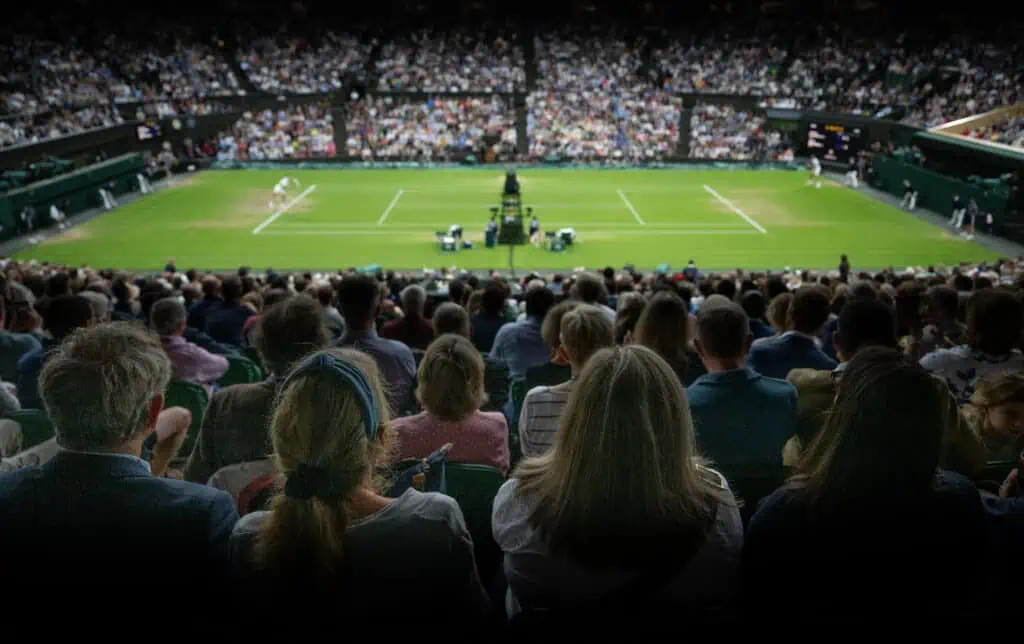
int(174)