


Search for your event

What’s new for Formula One in 2026

The engines have cooled in Bahrain, the data has been crunched, and the sand has settled on pre-season testing. But this wasn’t just any testing window, this was the first time we saw the most radical technical evolution in the history of Formula 1 take to the track.
The 2026 season represents a total “reset” for the sport. With brand-new power units, active aerodynamics, and a completely redesigned chassis, the pecking order has been shuffled, and the quest for the World Championship is wider open than it has been in a decade.
In this update, we break down the major rule changes, the results from testing, the drivers to watch, and the full 2026 race calendar. We also look at how you can experience this historic season through official F1® Paddock Club™ hospitality with Engage.
The 2026 Technical Revolution: What’s Changed?
The 2026 regulations are designed to make cars more agile, more sustainable, and better for wheel-to-wheel racing. Here are the concrete changes that are defining the new era:
1. The Power Unit: 50/50 Split
The new engines are a masterpiece of engineering. While the 1.6-litre V6 remains, the MGU-H (Heat Energy Recovery) has been removed. To compensate, the electrical component has been boosted by nearly 300%. The power output is now split almost equally:
- Internal Combustion Engine (ICE): ~400kW (535hp)
- Electric Motor (ERS): ~350kW (470hp)
2. Active Aerodynamics (X-Mode & Z-Mode)
For the first time, F1® cars feature fully active aero. Instead of just a moving rear wing (DRS), both the front and rear wings will move.
- Z-Mode: High-downforce for cornering.
- X-Mode: Low-drag for the straights to maximise top speed.
Manual Override Mode: Replacing the traditional DRS, this provides a boost of electrical power to the following car, creating more tactical overtaking opportunities.
3. Lighter, Narrower, Nimbler
Fans have long asked for smaller cars, and 2026 delivers. The cars are now:
- 30kg lighter (minimum weight down to 768kg).
- 200mm narrower (width reduced from 2000mm to 1800mm).
- 10cm shorter wheelbase.
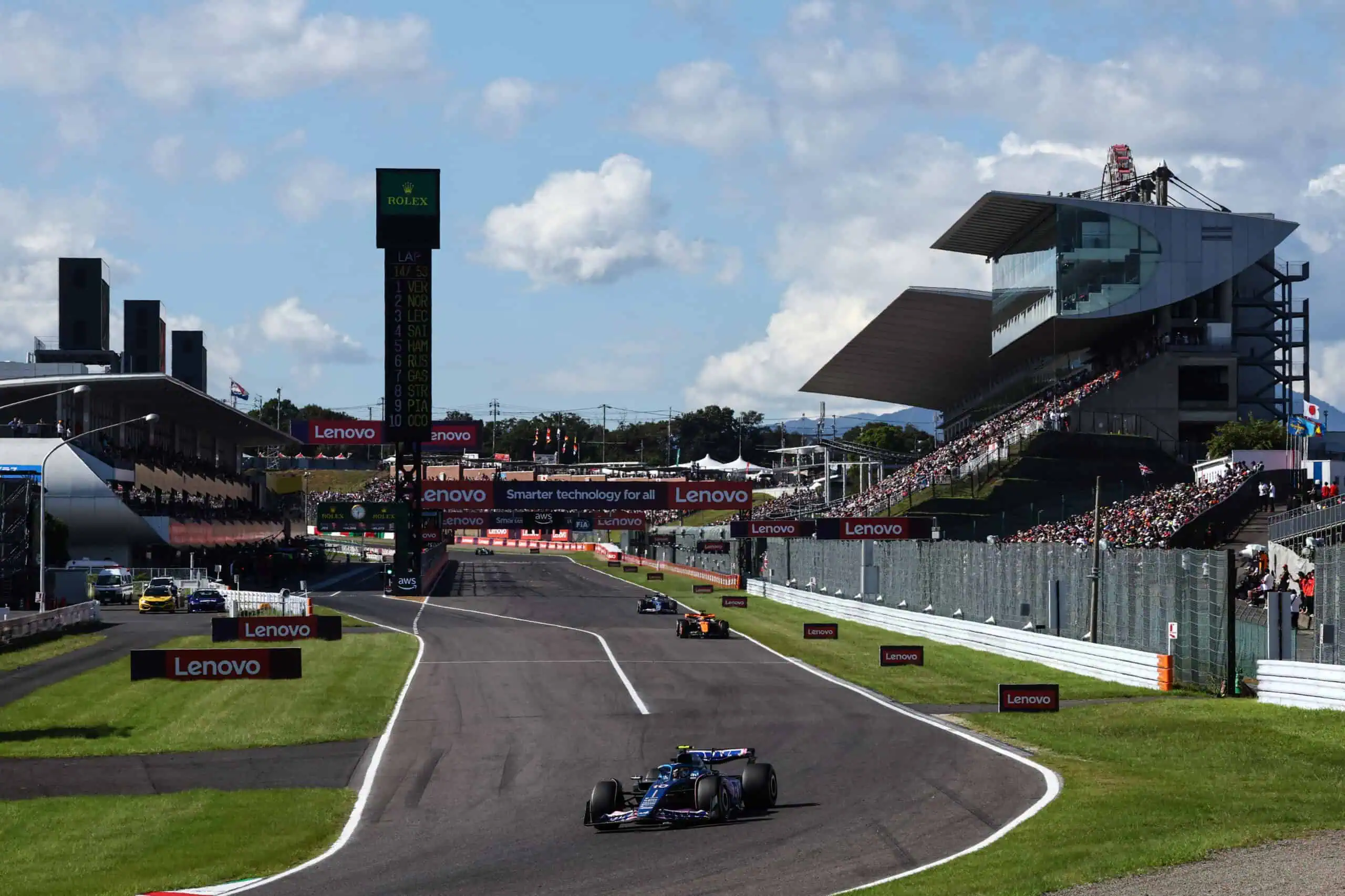
Formula 1 2026 Season
The European Shuffle: Portugal Returns and the Great Rotation
As F1® expands into new markets like Madrid and Las Vegas, the traditional European heartland is undergoing a significant transformation. The 2026 season marks the beginning of a new “rotational” strategy designed to keep historic tracks on the calendar while making room for new venues.
The Return of the “Rollercoaster”: Portimão 2027
One of the most exciting pieces of news to emerge following the 2026 testing window is the official return of the Portuguese Grand Prix. After a highly successful stint as a “filler” race during the pandemic, the Autódromo Internacional do Algarve (Portimão) has secured a new two-year agreement to host races in 2027 and 2028.
Known as the “rollercoaster” due to its dramatic elevation changes and blind crests, Portimão effectively takes the slot previously held by the Dutch Grand Prix at Zandvoort, which is set to drop off the calendar after its 2026 finale. For fans, this means the return of one of the most technical and spectator-friendly circuits in the world.
The Barcelona and Spa Rotation
Perhaps the most historic shift concerns two of F1’s® “Old Guard.” To accommodate the debut of the Madrid Grand Prix, which takes over the official title of the “Spanish Grand Prix” this September, the Circuit de Barcelona-Catalunya has entered a long-term rotation agreement with Belgium’s iconic Spa-Francorchamps.
- The 2026 Exception: Fans are in for a treat this year as both tracks remain on the schedule. Barcelona will host the newly titled “Barcelona-Catalunya Grand Prix” in June, while Spa retains its traditional July slot.
- The Swap (2027–2032): Starting in 2027, the two venues will alternate yearly. Spa will host in odd-numbered years (2027, 2029, 2031), while Barcelona will return in even-numbered years (2028, 2030, 2032).
This compromise ensures that the high-speed thrill of Eau Rouge and the technical perfection of Barcelona remain part of the F1® fabric until at least 2032, even as the sport embraces a more urban, street-circuit future.
Testing Analysis: Winners and Losers
The Pace-Setters: Ferrari & Mercedes
Charles Leclerc and Ferrari ended the Bahrain test on a high, setting the fastest lap of the entire pre-season at 1:31.992. Ferrari’s “upside-down” rear wing solution was the talk of the paddock, suggesting the Scuderia has found a significant aerodynamic edge.
Mercedes also enjoyed a productive test, topping the timing sheets on the first two days with George Russell and rookie Kimi Antonelli. Mercedes recorded the highest total mileage of any team (1,554 laps), suggesting their new power unit is both fast and reliable.
The Strugglers: Aston Martin
It was a “disastrous” test for Aston Martin. Plagued by Honda battery issues, they managed just 128 laps over three days, the lowest on the grid, leaving them with minimal data heading into the first race.
The Early Favourites
Following the conclusion of testing, the odds have shifted significantly. George Russell has emerged as the surprise favourite to take the title, likely due to Mercedes’ relentless reliability and early-test pace. However, Max Verstappen (Red Bull), the triple world champion remains in contention, but the new manual override system means he won’t be able to “disappear” at the front as easily as before.
Formula 1 2026 Calendar
Round 1 – Australia – March 6-8
Round 4 – Bahrain – April 10-12
Round 5 – Saudi Arabia – April 17-19
Round 10 – Austria – June 26-28
Round 11 – United Kingdom – July 3-5
Round 12 – Belgium – July 17-19
Round 13 – Hungary – July 24-26
Round 14 – Netherlands – August 21-23
Round 15 – Italy – September 4-6
Round 16 – Spain – September 11-13
Round 17 – Azerbaijan – September 25-27
Round 18 – Singapore – October 9-11
Round 19 – USA – October 23-25
Round 20 – Mexico – October 30 – November 1
Round 21 – Brazil – November 6-8
Round 22 – USA – November 19 – 21
Round 23 – Qatar – November 27-29
Round 24 – Abu Dhabi – December 4-6
Experience Paddock Club™ with Engage
With new cars, a legendary driver shuffle, and a more competitive field, there has never been a better time to attend a Grand Prix. The 2026 season is set to be a sell-out across the globe.
Engage provides official hospitality at the most iconic venues on the calendar. Whether it’s the glitz of the Paddock Club™ in Monaco, the historic atmosphere of Silverstone, or the twilight spectacle of Abu Dhabi, we offer:
- Prime Viewing: Locations directly above the pits or at key overtaking corners.
- All-Day Luxury: Gourmet catering, open bars, and air-conditioned suites.
- Exclusive Access: Pit lane walks and Q&A sessions with F1® personalities.
Ready to see the 2026 era unfold in person? Enquire now to secure your Paddock Club™ hospitality at this year’s most anticipated races.

 All Posts
Latest from the Blog
Formula 1 2026: A Season Already Full of Drama
Round 1 - Australian Grand Prix, Melbourne The 2026 Formula 1 season roared to life at Melbourne's Albert Park Circuit on 8 March, and it delivered everything fans had hoped for from a brand-new era of regulations. George Russell converted pole...
